Tell us about the job
Takes about a minute. No obligation.
Sizing a furnace for this house means accounting for a burner and heat exchanger that cycle through almost the entire calendar year. Homes in Columbia County, OR run heat about nine months a year, from October through June. A contractor quoting a new install here has to run a full load calculation before settling on equipment, because a unit that runs undersized through a season that long accumulates wear on the ignition system and heat exchanger at a rate a shorter idle period never masks. The contractor who skips that step leaves a homeowner with a system that fails mid-season rather than at a convenient time.
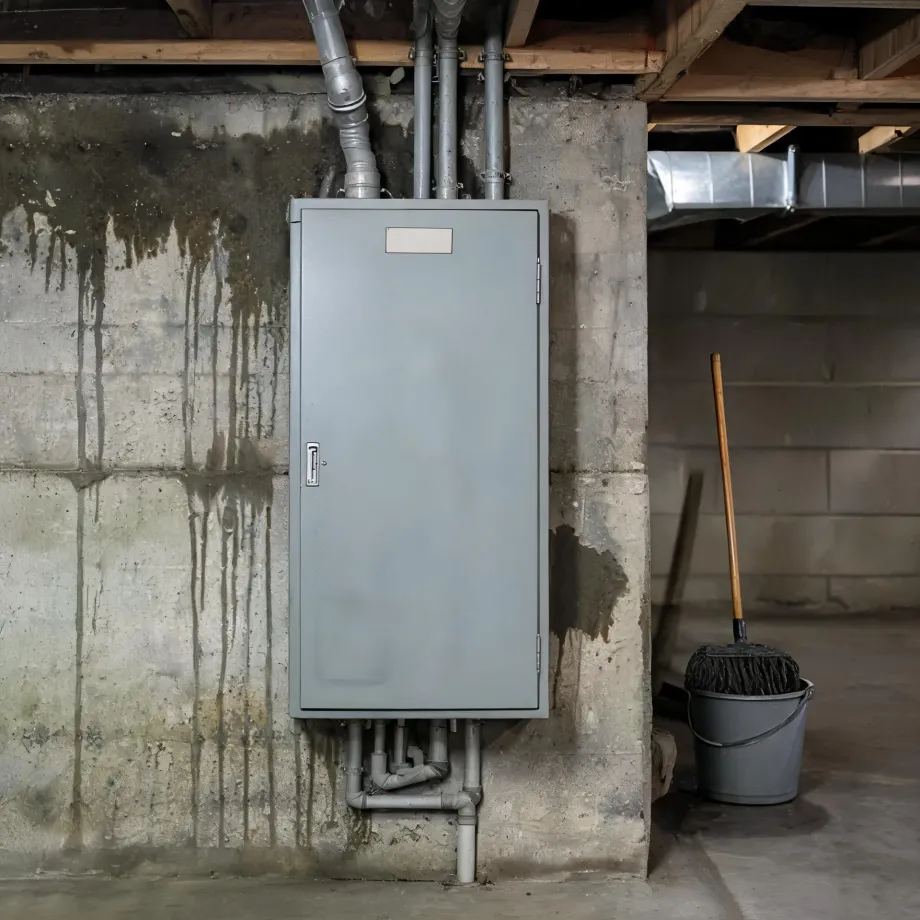
Ductwork sized and routed for older equipment is what a contractor opens the job on in much of this county. Half the homes in Columbia County, Oregon were built in 1981 or earlier (2020-2024 ACS 5-year). A furnace installation in a house like that is not decided by the unit itself but by whether the existing duct system can carry what the new furnace puts out, and whether the electrical service feeding it is wired for the load. If the ducts are undersized or the panel is not, those get addressed before the new equipment goes in.
What Gets Installed With a New Furnace
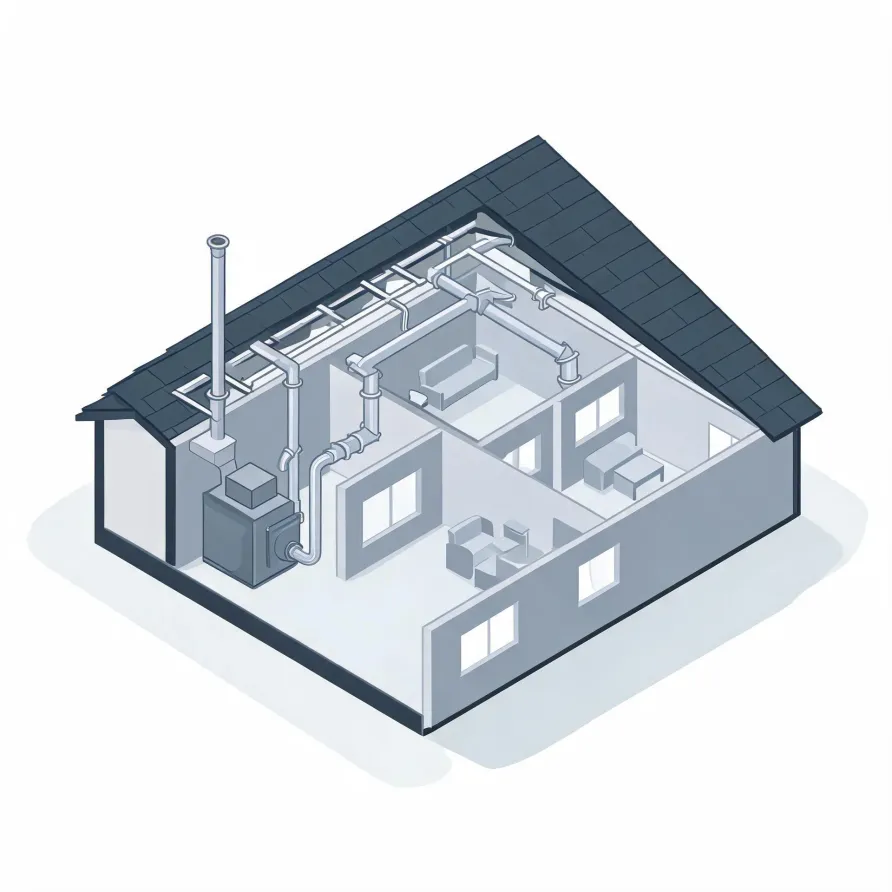
The furnace itself sits in a utility room, basement, or garage and is the box a homeowner sees when they walk into that space. Inside it, a burner assembly, heat exchanger, and blower motor work together to produce and push heated air. The contractor mounts and connects the unit during installation.
A flue pipe runs from the furnace to an exterior wall or roof to carry combustion gases out of the house. A thermostat goes on a main living area wall and gives the homeowner control over the system. Where the furnace connects to existing supply and return ductwork, the contractor fits transitions and seals those joints.
The drawing shows a typical layout, and a licensed contractor determines what applies to this specific house and its existing setup.
Get matched in Columbia CountyColumbia County, Oregon, by the numbers
2 severe weather events were recorded in Columbia County, Oregon between 2015 and 2024.
NOAA National Centers for Environmental Information, Storm Events Database, bulk CSV export, events 2015-01-01 through 2024-12-31.Half the homes in Columbia County, Oregon were built in 1981 or earlier (2020-2024 ACS 5-year).
U.S. Census Bureau, 2020-2024 American Community Survey 5-Year EstimatesColumbia County, Oregon holds 22,167 housing units (2020-2024 ACS 5-year).
U.S. Census Bureau, 2020-2024 American Community Survey 5-Year EstimatesOwners occupy 76.1% of the occupied homes in Columbia County, Oregon (2020-2024 ACS 5-year).
U.S. Census Bureau, 2020-2024 American Community Survey 5-Year EstimatesFurnace Installation Rules & Codes for Columbia County, Oregon6 sourced standards and regulations
What the installation looks like on your end
Non-weatherized gas furnaces manufactured on or after November 19, 2015 must reach 80.0 percent AFUE.
Non-weatherized oil-fired furnaces manufactured on or after November 19, 2015 must reach 83.0 percent AFUE.
Mobile home gas furnaces manufactured on or after November 19, 2015 must reach 80.0 percent AFUE.
Non-weatherized gas furnaces manufactured on or after December 18, 2028 must reach 95.0 percent AFUE, up from the 80.0 percent minimum that applies to units manufactured before that date.
Licensing and Legal Requirements in Columbia County, Oregon
Oregon’s contractor licence does not reach casual, minor or inconsequential work on one structure where the person’s contracts total less than $1,000 — and the exemption is unavailable to anyone who advertises or signs themselves as a contractor, at any price.
Oregon requires a current Construction Contractors Board licence, with the right endorsement, to undertake, offer to undertake or bid construction work.