Tell us about the job
Takes about a minute. No obligation.
Sizing a furnace for a Clatsop County home is not a step a contractor estimates by feel. Homes in Clatsop County, OR run heat about ten months a year, from September through June. The burner and heat exchanger carry real cumulative wear under a schedule like that, and a unit that is even modestly undersized runs longer cycles to meet setpoint, stressing the ignition system and the heat exchanger in ways that compound each season. A contractor working an installation here needs a load calculation before settling on equipment capacity, because the install that looked adequate in the first year often proves itself wrong by the third or fourth.
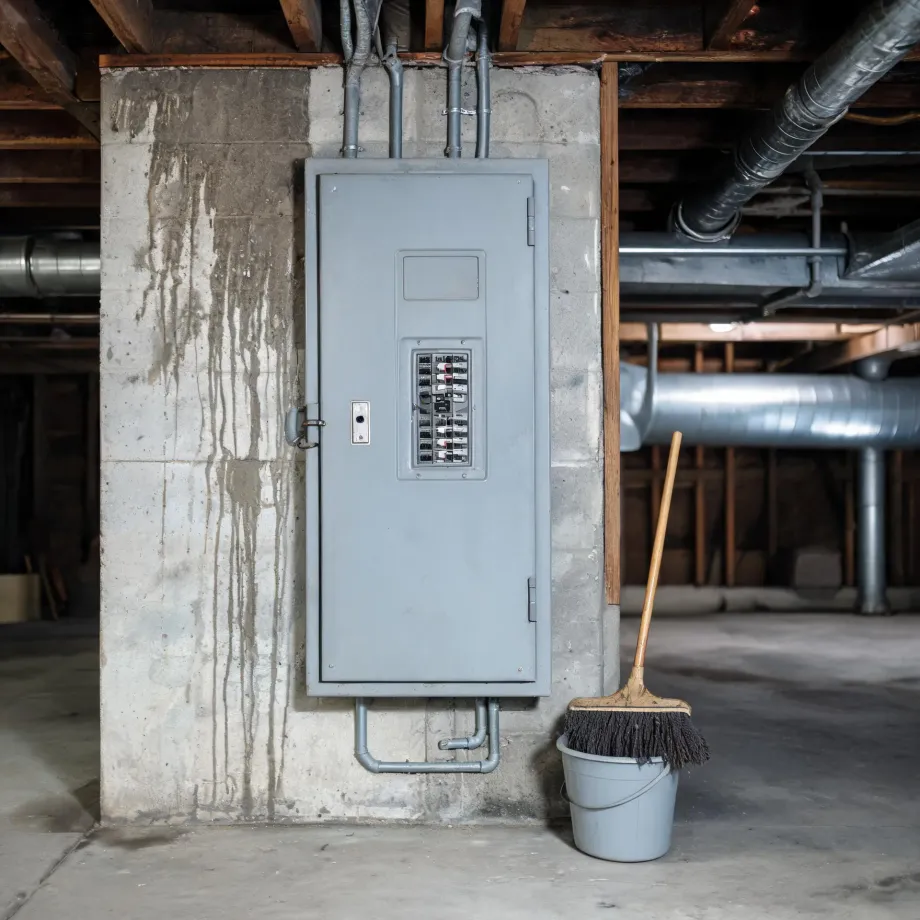
Ductwork in much of this county's housing was sized and routed for equipment that has since been replaced at least once, and what is in the walls now reflects those successive adaptations rather than anything a current furnace was designed to run through. Half the homes in Clatsop County, Oregon were built in 1975 or earlier (2020-2024 ACS 5-year). That history is what a contractor measures before settling on a unit: whether the existing distribution system can carry the airflow a new furnace produces, and whether the electrical service feeding the installation meets current draw requirements. Where the ductwork falls short, the scope of the job expands before the furnace itself is even selected.
What Gets Installed With a New Furnace
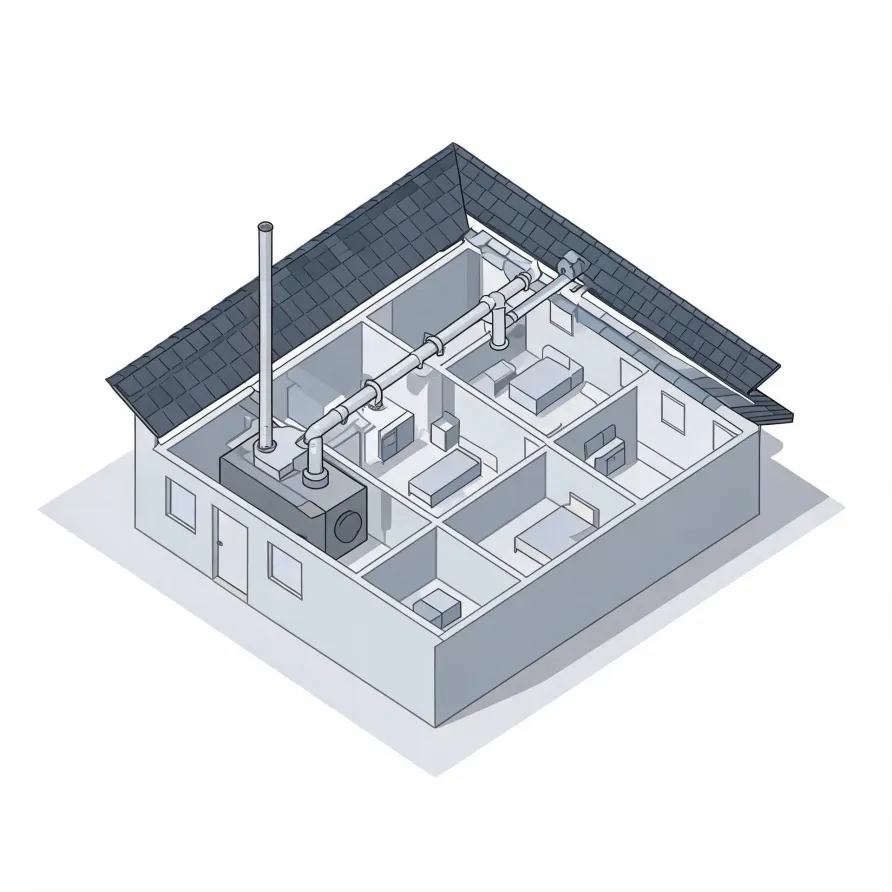
The furnace itself sits in the basement, utility room, or closet and is the unit a homeowner sees most clearly. Inside it, a heat exchanger and a blower work together: the exchanger warms the air, and the blower pushes that air out into the house. The thermostat mounts on a wall in the living area and tells the furnace when to run.
A flue pipe runs from the furnace up through the roof or out through a side wall and carries combustion gases out of the house. Alongside the furnace, a filter housing holds the air filter that every contractor will seat before the system runs for the first time. Some installs also include a new gas line connection at the furnace cabinet itself.
The drawing shows a typical layout, and a licensed contractor determines exactly what applies to your home and its existing setup.
Get matched in Clatsop CountyClatsop County, by the numbers
12 severe weather events were recorded in Clatsop County, Oregon between 2015 and 2024.
NOAA National Centers for Environmental Information, Storm Events Database, bulk CSV export, events 2015-01-01 through 2024-12-31.Half the homes in Clatsop County, Oregon were built in 1975 or earlier (2020-2024 ACS 5-year).
U.S. Census Bureau, 2020-2024 American Community Survey 5-Year EstimatesClatsop County, Oregon holds 23,395 housing units (2020-2024 ACS 5-year).
U.S. Census Bureau, 2020-2024 American Community Survey 5-Year EstimatesOwners occupy 63.2% of the occupied homes in Clatsop County, Oregon (2020-2024 ACS 5-year).
U.S. Census Bureau, 2020-2024 American Community Survey 5-Year EstimatesFurnace Installation Rules for Clatsop County, Oregon6 sourced standards and codes
What the Installation Actually Looks Like
Non-weatherized gas furnaces manufactured on or after November 19, 2015 must reach 80.0 percent AFUE.
Non-weatherized oil-fired furnaces manufactured on or after November 19, 2015 must reach 83.0 percent AFUE.
Mobile home gas furnaces manufactured on or after November 19, 2015 must reach 80.0 percent AFUE.
Non-weatherized gas furnaces manufactured on or after December 18, 2028 must reach 95.0 percent AFUE, up from the 80.0 percent minimum that applies to units manufactured before that date.
Licensing Rules for HVAC Work in Clatsop County, Oregon
Oregon’s contractor licence does not reach casual, minor or inconsequential work on one structure where the person’s contracts total less than $1,000 — and the exemption is unavailable to anyone who advertises or signs themselves as a contractor, at any price.
Oregon requires a current Construction Contractors Board licence, with the right endorsement, to undertake, offer to undertake or bid construction work.