Tell us about the job
Takes about a minute. No obligation.
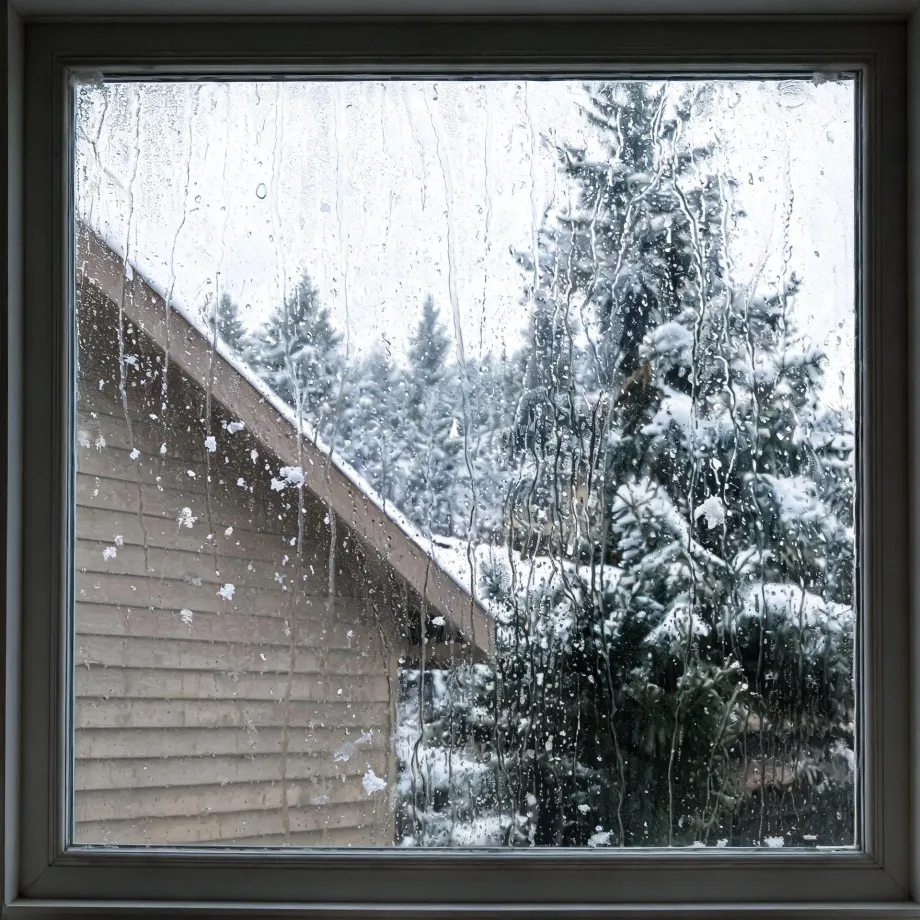
A furnace in Crook County rarely sits idle long enough for minor faults to stay hidden. Homes in Crook County, OR run heat about ten months a year, from September through June. The burner, heat exchanger, and ignition system cycle through nearly the entire year, and the parts that fail first in a repair call are almost always the ones that have been working hardest longest. A contractor quoting a repair here checks ignition components and heat exchanger condition early, because those are where accumulated wear shows up in a long heating climate.
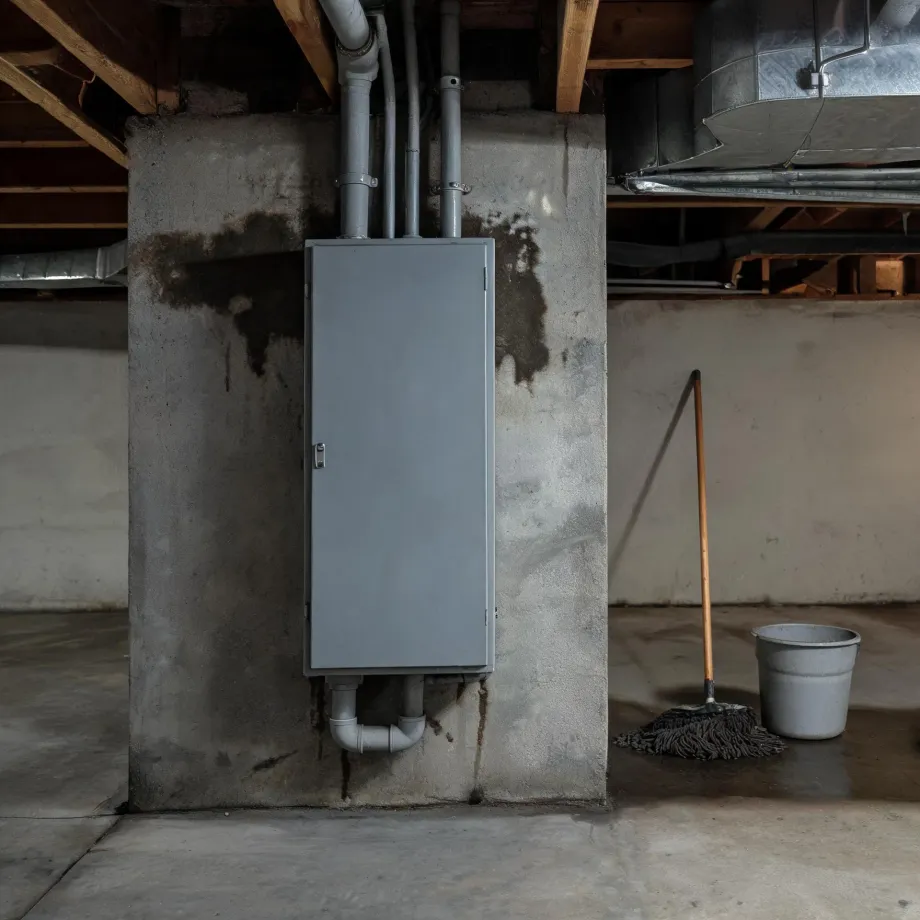
Furnaces running in Crook County houses frequently take parts that are harder to source than a contractor's first call to a supplier suggests. Half the homes in Crook County, Oregon were built in 1996 or earlier (2020-2024 ACS 5-year). A system installed into housing of that vintage was built around equipment families that have since been discontinued, redesigned, or folded into newer product lines, which means the opened unit sometimes requires a search rather than a reorder. That gap between what the house was built for and what is still available on a parts list is where repair jobs in this county get longer or more expensive than the initial diagnosis implied.
The Parts of a Furnace a Contractor Checks First
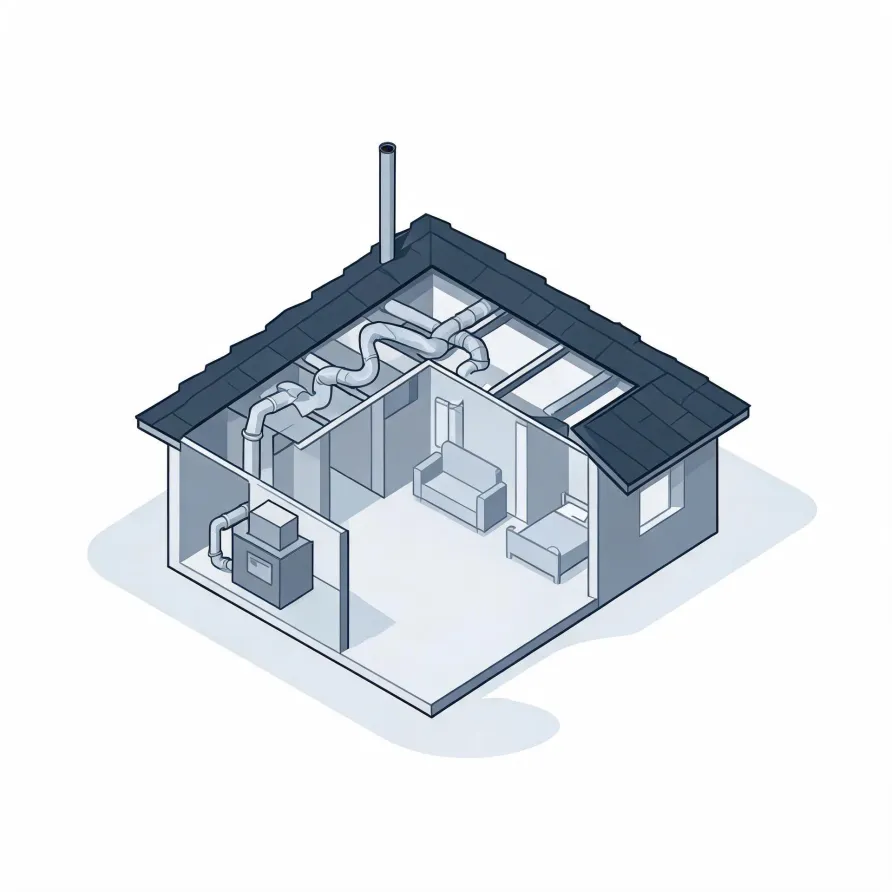
The furnace cabinet sits in a basement, utility room, or closet and holds the core components a contractor opens first: the heat exchanger, the burner assembly, and the blower motor. The heat exchanger is where combustion heat transfers to moving air, and a crack or failure there is both a safety and a performance problem. The burner assembly controls ignition, and the blower motor drives conditioned air into the ducts.
The flue or vent pipe runs from the cabinet to an exterior wall or roof and carries combustion gases out of the house. Alongside the cabinet sit the gas valve, the igniter, and the flame sensor, each of which the contractor tests individually when the system fails to start, runs briefly and shuts off, or heats unevenly.
The drawing shows the general layout of a furnace system, and a licensed contractor determines which components apply to the specific equipment and configuration in your home.
Get matched in Crook CountyCrook County, by the numbers
64 severe weather events were recorded in Crook County, Oregon between 2015 and 2024.
NOAA National Centers for Environmental Information, Storm Events Database, bulk CSV export, events 2015-01-01 through 2024-12-31.Half the homes in Crook County, Oregon were built in 1996 or earlier (2020-2024 ACS 5-year).
U.S. Census Bureau, 2020-2024 American Community Survey 5-Year EstimatesCrook County, Oregon holds 11,800 housing units (2020-2024 ACS 5-year).
U.S. Census Bureau, 2020-2024 American Community Survey 5-Year EstimatesOwners occupy 74.1% of the occupied homes in Crook County, Oregon (2020-2024 ACS 5-year).
U.S. Census Bureau, 2020-2024 American Community Survey 5-Year EstimatesCodes & Standards Governing Furnace Repair in Crook County, Oregon6 sourced rules and standards
What Repair Work Looks Like in Crook County
Non-weatherized gas furnaces manufactured on or after November 19, 2015 must reach 80.0 percent AFUE.
Non-weatherized oil-fired furnaces manufactured on or after November 19, 2015 must reach 83.0 percent AFUE.
Mobile home gas furnaces manufactured on or after November 19, 2015 must reach 80.0 percent AFUE.
Non-weatherized gas furnaces manufactured on or after December 18, 2028 must reach 95.0 percent AFUE, up from the 80.0 percent minimum that applies to units manufactured before that date.
Licensing and Legal Requirements in Crook County, Oregon
Oregon’s contractor licence does not reach casual, minor or inconsequential work on one structure where the person’s contracts total less than $1,000 — and the exemption is unavailable to anyone who advertises or signs themselves as a contractor, at any price.
Oregon requires a current Construction Contractors Board licence, with the right endorsement, to undertake, offer to undertake or bid construction work.
Severe Weather Events in Crook County
Heating equipment works harder and fails sooner when the weather turns extreme. How often that happens in Crook County shapes what furnace repair looks like here.
64 severe weather events, 2015–2024. Source: NOAA National Centers for Environmental Information, Storm Events Database.