Tell us about the job
Takes about a minute. No obligation.
A contractor diagnosing a furnace repair in Lincoln County has to account for what the equipment has already been asked to carry. Homes in Lincoln County, OR run heat about ten months a year, from September through June. The burner, the heat exchanger, and the ignition system cycle through that span with almost no idle time, and those are the components a contractor opens first. Weeks of summer standstill do little to offset the fatigue that accumulates on parts built to cycle, cool, and cycle again. Cracks in a heat exchanger and a worn igniter are the findings here, not surprises.
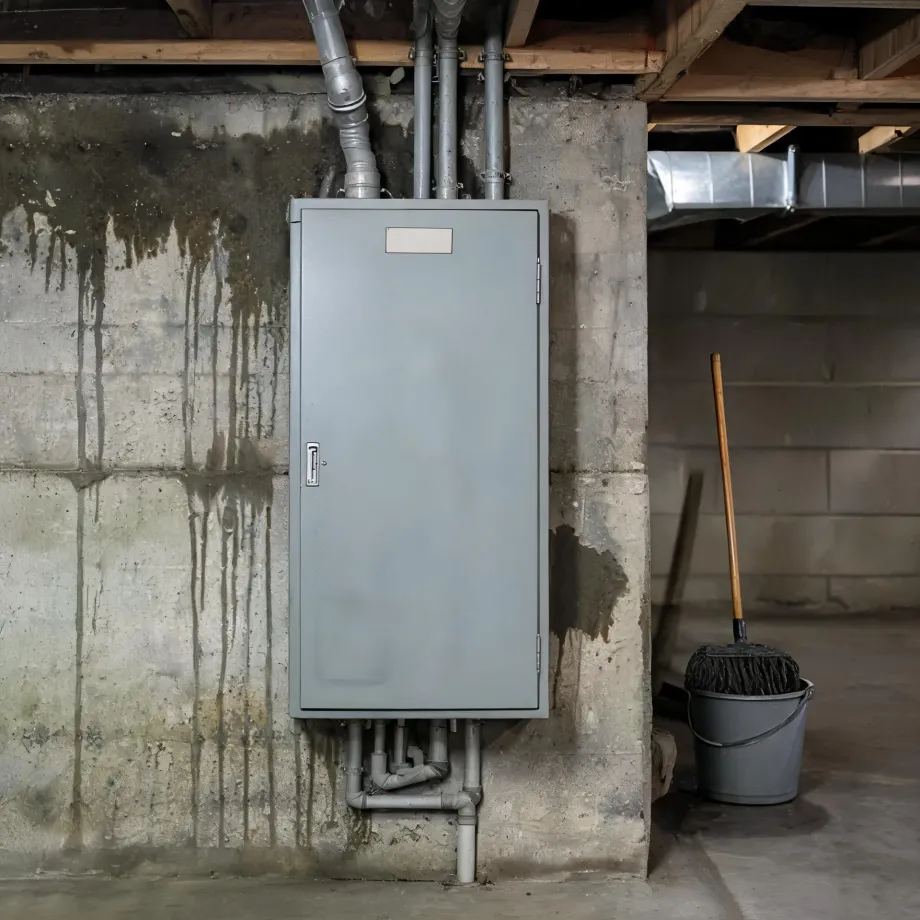
Older furnaces do not fail in predictable ways, and the parts a given unit takes are the first question a contractor has to answer once it is open. Half the homes in Lincoln County, Oregon were built in 1981 or earlier (2020-2024 ACS 5-year). A system running in a house that age has often been repaired before, which means a contractor opening the heat exchanger may find prior work, worn burner components, or a heat exchanger whose condition decides the whole job. If the manufacturer still makes the part, the repair goes one way. If it does not, the scope changes entirely, and that determination comes from what is inside the unit, not from what is visible before the panel comes off.
The Parts of a Furnace a Contractor Checks First
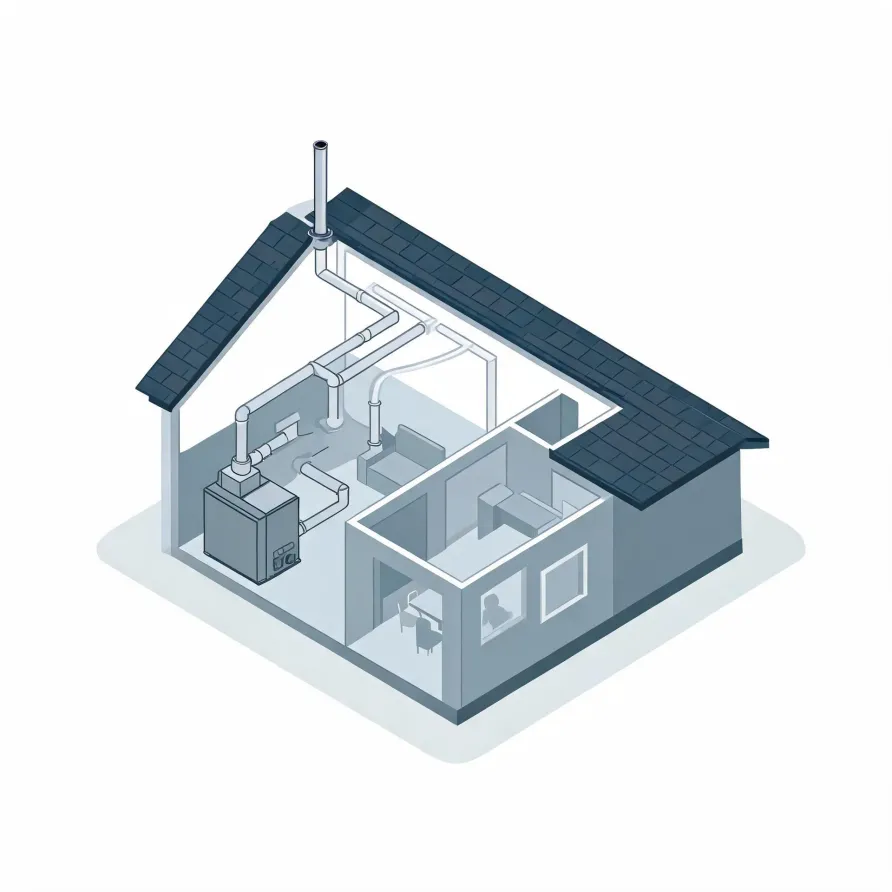
The furnace cabinet sits in a basement, utility closet, or garage and holds most of what a contractor will examine. Inside it, the heat exchanger is the piece that fails most quietly and matters most urgently. The burners, igniter, and flame sensor sit close together, and any one of them can stop a furnace from lighting or staying lit.
The blower motor and its wheel sit in the lower half of the cabinet and push air through the house once the burners have done their work. Near the cabinet you will find the flue pipe carrying exhaust out of the home, and the control board that reads every signal the system sends before deciding what to do next.
The drawing shows a typical layout, and a licensed contractor determines which parts apply to the specific furnace in your home.
Get matched in Lincoln CountyLincoln County, Oregon, by the numbers
9 severe weather events were recorded in Lincoln County, Oregon between 2015 and 2024.
NOAA National Centers for Environmental Information, Storm Events Database, bulk CSV export, events 2015-01-01 through 2024-12-31.Half the homes in Lincoln County, Oregon were built in 1981 or earlier (2020-2024 ACS 5-year).
U.S. Census Bureau, 2020-2024 American Community Survey 5-Year EstimatesLincoln County, Oregon holds 32,628 housing units (2020-2024 ACS 5-year).
U.S. Census Bureau, 2020-2024 American Community Survey 5-Year EstimatesOwners occupy 71.5% of the occupied homes in Lincoln County, Oregon (2020-2024 ACS 5-year).
U.S. Census Bureau, 2020-2024 American Community Survey 5-Year EstimatesCodes & Standards Covering Furnace Repair in Lincoln County, Oregon6 sourced rules and standards
What Happens When the Contractor Arrives
Non-weatherized gas furnaces manufactured on or after November 19, 2015 must reach 80.0 percent AFUE.
Non-weatherized oil-fired furnaces manufactured on or after November 19, 2015 must reach 83.0 percent AFUE.
Mobile home gas furnaces manufactured on or after November 19, 2015 must reach 80.0 percent AFUE.
Non-weatherized gas furnaces manufactured on or after December 18, 2028 must reach 95.0 percent AFUE, up from the 80.0 percent minimum that applies to units manufactured before that date.
Licensing Rules for HVAC Repair in Lincoln County, Oregon
Oregon’s contractor licence does not reach casual, minor or inconsequential work on one structure where the person’s contracts total less than $1,000 — and the exemption is unavailable to anyone who advertises or signs themselves as a contractor, at any price.
Oregon requires a current Construction Contractors Board licence, with the right endorsement, to undertake, offer to undertake or bid construction work.