Tell us about the job
Takes about a minute. No obligation.
Sizing a furnace for Baker County starts with how long the burner actually runs, not just how cold the worst days get. Homes in Baker County, OR run heat about ten months a year, from September through June. A burner and heat exchanger cycling through that span accumulate stress on the ignition system, the heat exchanger seams, and the flue connections in ways that a shorter season would not produce. A contractor who skips a proper load calculation here risks installing a unit that runs harder than it should, and the heat exchanger pays that cost first. Getting the size right from the start is what a licensed installer establishes before anything else on the quote.
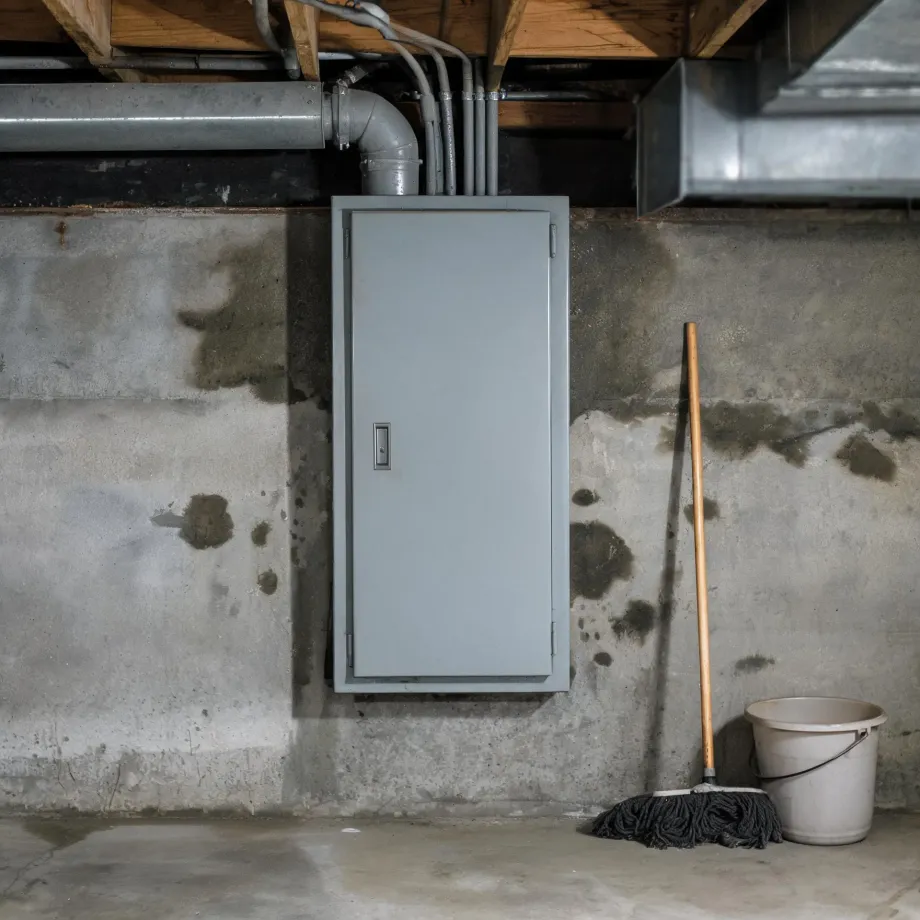
Ductwork laid for a mid-century furnace carries assumptions about airflow, return paths, and trunk sizing that a modern unit will expose fast. Half the homes in Baker County, Oregon were built in 1967 or earlier (2020-2024 ACS 5-year). A contractor installing a new furnace in a house like this checks whether the existing duct system can move the volume the new equipment expects, and in houses this old, the answer shapes the whole job. Electrical service gets the same look, since the load a current furnace draws is not what the original wiring anticipated. The duct evaluation is where the price and the scope are actually decided.
What Gets Installed With a New Furnace
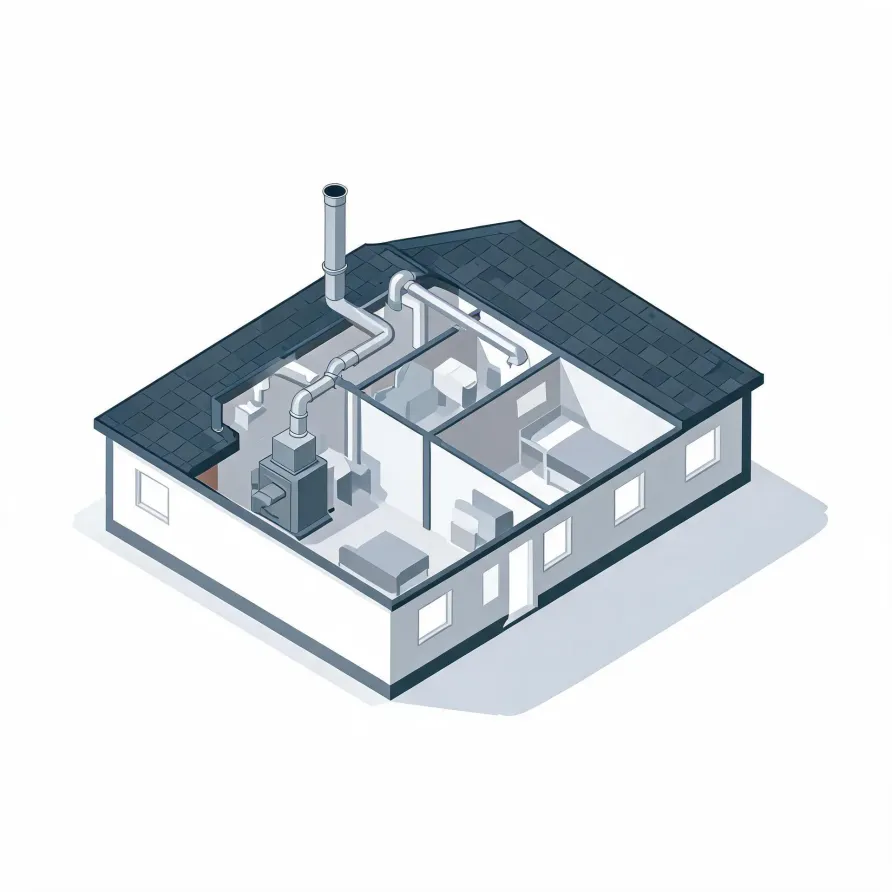
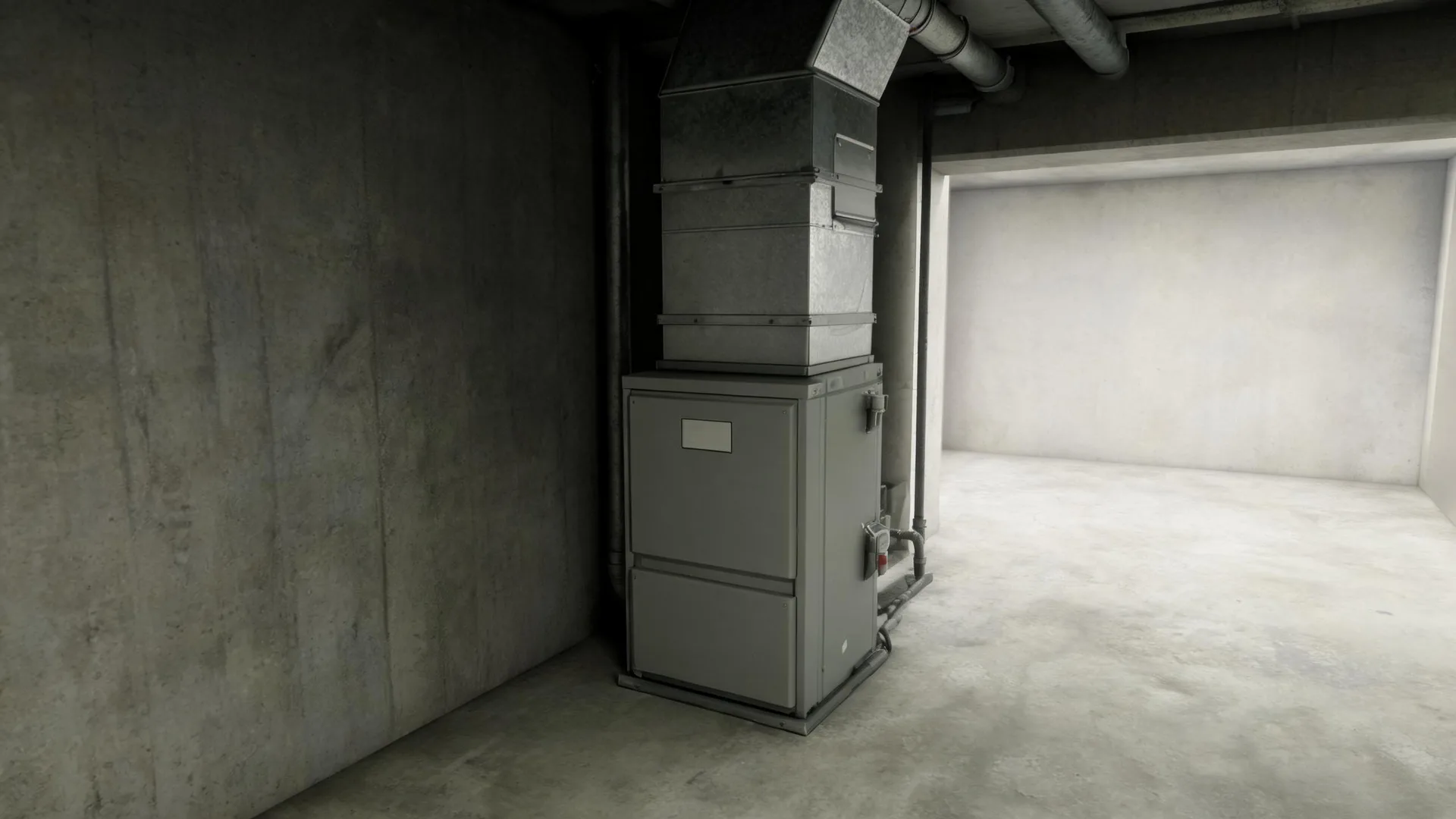
The furnace itself sits in a utility room, basement, or closet and is the box that produces heat for the house. Attached to it is the flue, which runs up through the house and exits the roof or an exterior wall, carrying combustion gases out. The filter housing mounts directly to the furnace cabinet and holds the filter that cleans air before it enters the heat exchanger.
The blower motor lives inside the furnace cabinet and pushes conditioned air out into the supply side of the duct system. Alongside the furnace, a contractor installs the thermostat on an interior wall, and in many homes a separate air handler or evaporator coil sits directly above the furnace to work with a cooling system.
The drawing shows a typical layout, and a licensed contractor determines exactly which components apply to your home.
Get matched in Baker CountyBaker County, by the numbers
41 severe weather events were recorded in Baker County, Oregon between 2015 and 2024.
NOAA National Centers for Environmental Information, Storm Events Database, bulk CSV export, events 2015-01-01 through 2024-12-31.Half the homes in Baker County, Oregon were built in 1967 or earlier (2020-2024 ACS 5-year).
U.S. Census Bureau, 2020-2024 American Community Survey 5-Year EstimatesBaker County, Oregon holds 8,725 housing units (2020-2024 ACS 5-year).
U.S. Census Bureau, 2020-2024 American Community Survey 5-Year EstimatesOwners occupy 71.5% of the occupied homes in Baker County, Oregon (2020-2024 ACS 5-year).
U.S. Census Bureau, 2020-2024 American Community Survey 5-Year EstimatesFurnace Installation Rules on the Books for Baker County, Oregon6 sourced standards and codes
What the installation looks like in Baker County
Non-weatherized gas furnaces manufactured on or after November 19, 2015 must reach 80.0 percent AFUE.
Non-weatherized oil-fired furnaces manufactured on or after November 19, 2015 must reach 83.0 percent AFUE.
Mobile home gas furnaces manufactured on or after November 19, 2015 must reach 80.0 percent AFUE.
Non-weatherized gas furnaces manufactured on or after December 18, 2028 must reach 95.0 percent AFUE, up from the 80.0 percent minimum that applies to units manufactured before that date.
Licensing Rules for HVAC Work in Baker County, Oregon
Oregon’s contractor licence does not reach casual, minor or inconsequential work on one structure where the person’s contracts total less than $1,000 — and the exemption is unavailable to anyone who advertises or signs themselves as a contractor, at any price.
Oregon requires a current Construction Contractors Board licence, with the right endorsement, to undertake, offer to undertake or bid construction work.
Severe Weather Events in Baker County
Weather puts a load on heating equipment. How hard a furnace has to work, and how often, is shaped by what the local climate actually does, which is why installation sizing and equipment selection in Baker County are not generic decisions.
41 severe weather events, 2015–2024. Source: NOAA National Centers for Environmental Information, Storm Events Database.