












Profile view of a bearded man wearing a black baseball cap and a dark gray T-shirt against a plain light background.

Why your furnace whistles in Oregon

Step 1 of 3: Equipment

A whistling sound usually means air is being forced through an opening too small for it. Most of the time that's a dirty filter, choked down with dust so the blower has to push harder to pull air through it. It can also be a return vent that's partly closed or blocked by furniture, or a gap around the filter slot where air is sneaking past the edges instead of going where it should. Since most homes in Oregon heat with electric furnaces, the blower is doing steady work most of the winter, and a filter that's been in place a while is often the simple cause. The whistle itself isn't dangerous, but it's the furnace telling you it's working harder than it needs to. Left alone, that strain adds up on the blower motor over time. Checking the filter is worth doing before anything else.

A smiling man in a gray long-sleeved shirt stands in a kitchen looking to the side, with open shelves of dishes, a white mug on the counter, a potted plant, and a view through a doorway into a living room.
A smiling bearded man in a green sweater sits at a white marble kitchen island with a mug, potted plant and bowl of fruit, in a bright white interior with open shelving and an arched doorway.
A smiling man with dark curly hair and a beard, wearing a dark green knit sweater, stands at a white marble kitchen counter with a dark blue mug, with open shelving, pendant lights and a houseplant behind him.
A smiling man in a green ribbed sweater stands behind a wooden table holding a ceramic mug of coffee in a kitchen with white subway tile, shelves of potted plants, and a bowl of fruit.
  1. Dust builds up in the filter until the weave closes in.

  2. The blower pulls harder to drag air through the clog.

  3. Air speeds up squeezing past the narrow gap left open.

  4. That fast air hits the edge and starts to whistle.

A gray high-efficiency furnace with white PVC vent pipes stands beside sheet-metal ductwork and a water heater in an unfinished basement with concrete walls and wood framing.
A clean filter lets air move through at the speed the blower expects, so there's nothing to whistle past.
A beige gas furnace with a metal flue pipe stands in a basement against concrete block walls, beside sheet-metal ductwork, copper and white plastic pipes, and a water heater at right.
A clogged filter or a blocked vent leaves only a narrow gap, and air forced through it starts to squeal.

Is that whistle something you should worry about?

You'd hear it most when the furnace kicks on, a thin squeal that settles down once it's been running a few minutes or fades out when it shuts off. Check the filter first. If you can't remember the last time you changed it, that's likely your answer. Walk the house and see if any vents got closed or blocked by furniture, since that narrows the path air has to take just the same way. Left alone, a blower working that hard against a clogged filter wears down faster than it should, and electric furnaces already ask a lot of your power bill without added strain.

An older beige furnace with two louvered vent panels stands on a concrete basement floor, connected to galvanized ductwork and a metal flue pipe, with gas piping and flexible conduit on the wall behind.
Before you get your furnace repair
A beige high-efficiency furnace in an unfinished basement, with white PVC vent pipes, a yellow gas line, metal ductwork, and exposed wood framing on a concrete floor.
After you get your furnace repair

Why a blocked filter strains the blower

A furnace blower is built to move a set amount of air. When a filter is clean, it meets almost no resistance getting there. Once dust packs the weave tight, the blower doesn't back off, it pushes harder to pull the same volume of air through a much smaller opening. That's the motor working against a restriction it wasn't sized for. Left alone, that strain doesn't stay quiet. It can shorten the life of the blower motor, and in some furnaces it trips a safety switch that shuts the system down before it overheats. The whistle is the early warning, not the damage itself.

A sound you can track down room by room

Partly closed vents cause the same problem a filter does, just in a different spot. Walk the house and check which supply and return vents are open all the way. A vent pushed mostly shut forces air through a narrow slot, and that's where a squeal tends to show up loudest, right at the grille. If the sound is coming from one room instead of near the furnace itself, that's usually the vent, not the filter. Either way, it's something you can check yourself before deciding whether this is a five-minute fix or one that needs a contractor who works on these systems.

A smiling man with dark curly hair in a navy t-shirt sits on a gray couch indoors, with a large-leafed plant and a window in the background.
A bearded man in a plaid flannel shirt stands in a kitchen looking out a window toward snow-covered shrubs, with a steaming mug on the windowsill and potted plants on a shelf behind him.
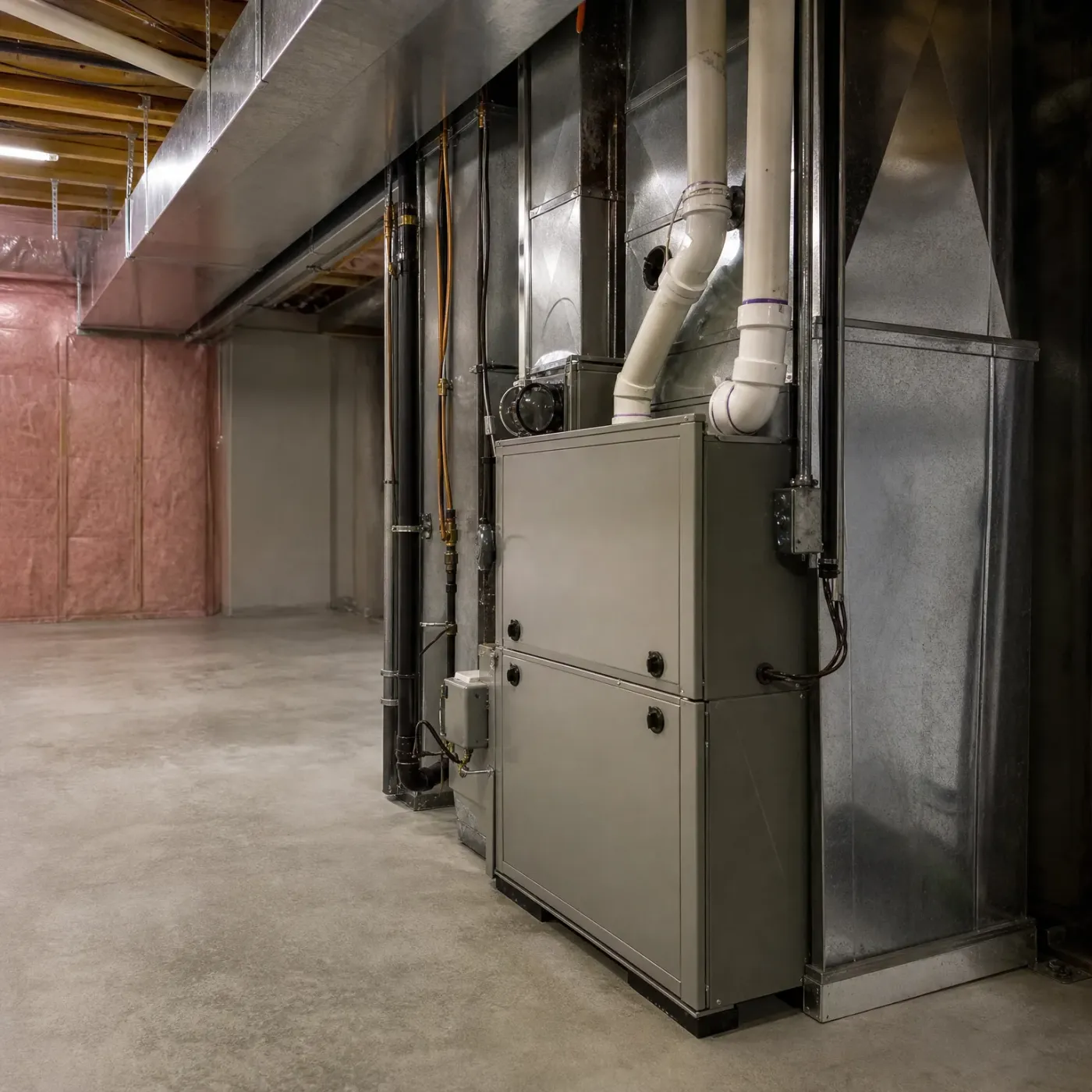
An unfinished basement with a concrete floor, pink insulation on one wall, exposed joists, galvanized sheet-metal ductwork, PVC vent pipes, and a tall gray furnace with attached gas and electrical lines.

Hand off the furnace problem

Your request goes to one pro, not a list of companies.

Send the request and finding a pro stops being your problem.

Hand off the search

There's no charge for the request.

Fix it yourself or call someone

Filter you can fix

  • A dirty filter is something you can pull out and check yourself in under a minute.
  • Swapping it for a clean one often quiets the whistle the next time the furnace kicks on.
  • If the whistle fades after you change the filter, that was the whole problem.
  • A closed or blocked return vent is the same kind of fix, just open it back up and see.

Needs a contractor

  • If the filter's clean and the whistle is still there, the narrow gap is somewhere else in the system.
  • A licensed contractor local to Oregon can trace the sound to the duct, the blower, or a seal that's come loose.
  • Someone who services furnaces here every winter knows which of those usually goes first.
  • One contractor means one visit and one diagnosis, not several companies calling about the same whistle.
  • Once the form goes in, tracking down that contractor stops being something you have to manage.
  • A problem caught early, before the blower's straining hard against it, is usually simpler to put right.
A gray high-efficiency furnace in a basement, connected to sheet-metal ductwork on the left and white PVC vent pipes above, with black gas and drain piping and an exposed wood-stud wall with OSB sheathing on the right.

Running quiet

A furnace that's drawing air the way it should doesn't call attention to itself. The filter is clean, the ducts carry what the blower pushes, and the whistle has nothing to catch on. This is what yours should sound like most of the time it runs.


An older gas furnace with two louvered front panels stands on a concrete basement floor beside galvanized sheet-metal ductwork, pipes, and a weathered concrete wall.

Straining to breathe

An older furnace working against a clogged filter or a blocked vent has to push harder for the same air. That's where the whistle comes from, and left alone, the blower keeps working that hard every time it kicks on. A repair tech can tell you if the furnace itself is still sound or showing its age.

Winter nights average 32°F statewide

Those 32°F nights mean the furnace is cycling on often, sometimes most of the night, to keep the house warm. A blower running that much will find a clogged filter or a half-shut vent fast, and that's when the whistle shows up.

NOAA nClimDiv 1991-2020 county normals weighted by homes

What the whistle tells you

  • A whistle that fades once you've changed the filter or opened a closed vent was never a sign of anything else.
  • A whistle that stays after that points to the blower, the ductwork, or a part that needs a trained eye to find.
  • An Oregon contractor who services furnaces all winter has likely traced this exact sound back to its source before.
  • One local, licensed contractor takes the call, so you're not sorting through bids from companies that don't know your system.
  • Catching it now, while it's still just a sound, keeps it from turning into a blower that's worked too hard for too long.
  • You already know what to check first; what's left is having someone confirm it and fix what the filter and vent didn't.

A furnace whistle has a short list of causes, and you've likely already ruled some out. A clean filter and an open vent take care of most of them. If the sound is gone after that, it was never anything more than air squeezing through a gap that's since been cleared. If it's still there, the air is still being forced through something too narrow, and that something isn't the filter anymore. It could be the blower pushing harder than it should, a duct that's narrowed or come loose, or a part worn enough to change how air moves past it. That's not something to leave alone through an Oregon winter, when the furnace is running most nights to keep up. A contractor who works on furnaces all season in this area has heard this whistle before and knows where it tends to come from once the easy fixes are done. Send the request and one licensed local contractor takes it, not a handful of companies competing for your callback. That means one visit, one person who looks at your system and tells you straight what's making the noise, instead of you fielding calls from several outfits guessing over the phone. You've done the part you could do yourself. What's left is the part that needs someone who's traced this sound to its source before, in a house like yours, in weather like this.

A dark wood cabinet with a paneled door and a ceramic pot of green foliage on top stands in a beige-walled room with white baseboard, a window at left, hardwood floor, and a patterned area rug.
A dark wood glass-front cabinet holding folded towels, woven baskets and a ceramic vase stands in a bathroom corner beside a window, with a potted fern and stacked towels on top and a freestanding tub partly visible at left.
A woven basket holding a green cushion and a cream fringed knit throw sits on a wood floor in a room corner beside a window and a dark wooden cabinet.
Corner of a room with a dark wood cabinet topped by a round vase, a linen curtain at a window, white baseboard, oak plank flooring with sunlight patches, and a woven jute rug in the foreground.
A dark wood sideboard against a pale wall holds a shallow stone bowl and a round ceramic vase with leafy branches, with sunlight from a curtained window falling across the wall, wood floor and woven rug.

Send one request and you're done looking

The pro who reaches out is licensed in Oregon.

Send my request

You only hire the pro if you want to.



