







A calm river with mist rising from its surface, bordered by a rocky cobble shore on the right and conifer-covered slopes and cliffs, with fog-shrouded hills and overcast sky in the distance.Get my match

What size generator runs a furnace in Oregon

A local installer who puts in furnaces gets your project.

Most homes in Oregon heat with electricity, which means a power outage hits your furnace directly. No power, no heat, even if the furnace itself is fine. A generator sized to run it is really a generator sized to keep the blower motor, the control board and the igniter all running at once, not just the thermostat on the wall.

That sizing question depends on your specific furnace. The blower motor draws a lot more current when it starts up than when it's running steady, and a generator that can't cover that startup draw will trip or stall even if its running wattage looks like enough on paper. The right answer depends on the model installed in your home, the rest of what you want running on the same circuit, and whether you want it to start on its own when the power drops.

That's the kind of detail a contractor who installs generators works out by looking at your actual setup, not by a rule of thumb. Oregon's grid sees its outages mostly in winter storms, when losing a furnace is not a small inconvenience, so getting the sizing right matters more here than someplace with mild weather and electricity as a backup.

Once you send a request through this page, the work of finding someone qualified is off your plate. You get matched with a contractor who handles installs like this in your area, and they'll reach out to go over what your home actually needs. You won't be left comparing wattage charts on your own or guessing what your furnace draws on startup. That part gets handled by someone who does this for a living, once you've taken the first step.

A furnace itself doesn't need much power, since its job is moving and controlling air, not making heat with electricity. Most electric furnaces run the heating elements on a separate heavy draw, but if your home heats with an electric furnace, the whole system can call for a lot more than a gas furnace's blower and controls alone. A gas furnace typically needs a generator in the 5,000 to 7,000 watt range to start and run the blower motor, igniter and control board. An electric furnace with resistance heat strips can call for 15,000 watts or more, since those strips draw heavily the moment they kick on. Check your furnace's nameplate or your electrical panel for the breaker size tied to it, since that tells you more than a guess ever could. Getting the size right matters because an undersized generator won't start the blower at all, and you'll find that out the moment the power goes out and the house starts to cool.

A gray high-efficiency furnace with two PVC vent pipes stands in an unfinished basement beside sheet-metal ductwork, a framed and plastic-covered wall, and a bare concrete wall with vertical pipes.
Here the furnace draws steady, modest power: the blower moves air, the control board runs the cycle, nothing pulls more than the system was built for.
A gray furnace cabinet in a basement, connected to galvanized sheet-metal ductwork and white PVC pipes, against a concrete wall with exposed metal piping and insulation overhead.
Here the furnace sits dead until power returns, and everything downstream of that, the blower, the board, the ignition, waits with it.

How Electric Furnaces Stage Power

  • An electric furnace's heating elements draw in stages, so the whole bank rarely switches on at once.
  • A generator sized for the blower and controls alone will stall the moment a second or third heating stage kicks in.
  • Furnace nameplates list running watts and starting watts separately, and the starting number is what trips an undersized generator.
  • Whole-house standby generators handle staged electric heat because they're sized against the home's full electrical panel, not just one appliance.
  • A transfer switch keeps the furnace circuit isolated from the rest of the house so the generator isn't also carrying the water heater or range at the same time.
  • Running an electric furnace on a portable generator usually means picking which heating stages to allow, not running the whole unit as installed.

An electric furnace doesn't fire all its heat at once. Inside are several heating elements, usually banked in stages of a few kilowatts each, and the control board brings them on one at a time as the thermostat calls for more heat. On a mild night only the first stage might run. On a cold one, all of them do. That staging is what makes sizing a generator for an electric furnace harder than sizing one for a gas furnace. The nameplate will list a running watt figure and a separate starting watt figure, and the starting number is the one that matters when a generator is deciding whether it can handle the load. A portable generator sized only for the blower and the control board will carry the furnace fine right up until a second or third stage kicks in, and then it stalls. A whole-house standby generator avoids that problem because it isn't sized against the furnace alone. It's sized against the home's full electrical panel, with enough capacity to let every stage switch on as the furnace was built to run. The transfer switch that comes with it matters just as much as the generator itself, since it keeps the furnace circuit from having to share capacity with the water heater or the range at the same moment. Without that separation, even a properly sized generator can end up stretched thin by whatever else in the house happens to be drawing power at the same time.

An older woman with gray hair in a cream knit sweater sits under a blanket on a sofa by a window, looking outside toward yellow-leaved trees, with a lamp, shelves and an armchair in the room behind her.
A gray-haired woman in a chunky knit sweater sits in an armchair with a blanket, looking out a window at yellow autumn foliage, with bookshelves and a potted plant behind her.
A gray-haired woman in a navy sweater sits in an armchair with a knit blanket beside a window, looking out at yellow autumn foliage, with a dining table and houseplant in the room behind her.
A gray-haired woman in a gray cowl-neck sweater sits in an armchair with a blanket, looking out a dark-framed window toward yellow autumn trees.

A local pro for your furnace installation

Send the form and stop researching installers for the new furnace.

Asking costs nothing, and the choice to hire stays yours.

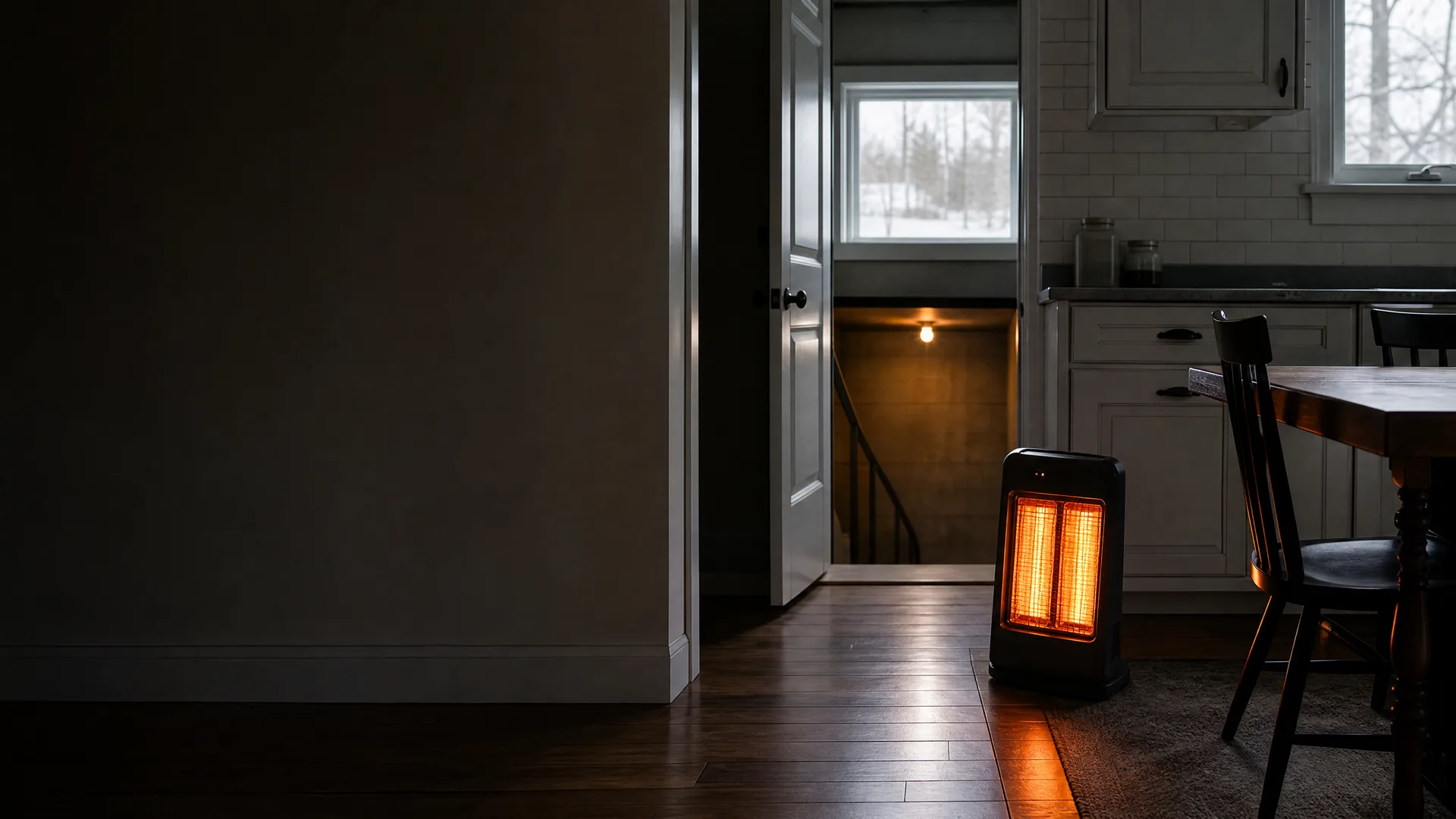
A portable electric space heater with glowing orange elements stands on a dark wood floor in a dim room beside an open door leading to a lit stairway, with a kitchen counter, window and wooden table and chairs at right.

The space heater by the table is doing the furnace's job this morning, and doing it badly. It's maybe six, still dark outside, and the kitchen is the one warm spot in the house. You've got a sweatshirt on over another sweatshirt. The basement door is open because you went down twice already to check the breaker panel, like that might change anything. It won't. The furnace needs the grid back, not a reset. Out there the cold snap that took the power lines down is still working on the trees. In here, the coffee's hot at least, and the heater's coil is the only orange light in the room.

What does your house feel like without the furnace running

Walk through your house during an outage and the cold tells you what's not running. The thermostat screen is dark. Vents that usually push warm air sit quiet. Within a few hours the house starts to feel like the temperature outside has more say than your furnace does, because it does. If this happens in January, that's not a comfort problem by evening, it's pipes sitting in a cold house overnight. A refrigerator losing its seal over hours is one thing. A furnace that stays off for a day in the parts of Oregon that get real cold is a different kind of risk to the house itself.

A gray furnace cabinet in a basement with sheet-metal ductwork, white PVC vent pipes, and black gas piping against a concrete wall and wood-framed partition on a bare concrete floor.

Furnace running as it should

This is a standard setup. The blower pushes warm air through the big duct, the gas line and exhaust pipes feed the burner, and the control board cycles the whole thing on schedule. A generator sized to the nameplate watts keeps every part of this running the way it was built to.


A gray metal furnace with two white PVC vent pipes stands on a concrete floor beside galvanized sheet-metal ductwork in a basement or utility space with wood framing.

Furnace with no power

Surface rust and age aside, this furnace can't do anything without power, even though it burns gas to make heat. The igniter won't spark, the inducer motor won't pull air through those PVC pipes, and the blower won't push a single degree of warmth into the house until the generator picks up the load.

Portable or Standby: Which One Covers You

Portable generator

  • A portable unit is cheaper to buy and you can take it with you if you move.
  • Running it means a cord through a window or door, and checking on fuel every few hours.
  • Most portables can't carry the full load of an electric furnace once more than one heating stage kicks in.
  • You have to be home and awake to start it, refuel it and shut it down.
  • It sits in a shed or garage the rest of the year, doing nothing until the day you need it.
  • Starting it in the cold at 2 a.m. is part of the deal.

Standby generator

  • A standby unit is wired into your house and starts on its own within seconds of an outage.
  • It's sized to carry an electric furnace through every heating stage, not just the blower and board.
  • There's no fuel to haul and no cord to run, since it draws from a fixed line to the house.
  • It keeps running whether you're home, asleep, or away for the weekend.
  • Installation means a permit, a dedicated pad or mount, and a hookup to your home's electrical panel.
  • It costs more upfront than a portable, and that's the trade for not thinking about it again.
A beige high-efficiency furnace stands on a concrete basement floor beside sheet-metal ductwork, with white PVC vent pipes and a gas line running along an insulated wood-framed wall.

Furnace running normally

The blower moves air through the ductwork, the control board cycles the system on schedule, and the gas valve and flue pipes do their job without strain. A generator sized for the full load keeps all of it going, including the moment the heating elements step up.

An older metal furnace with a louvered front panel stands against a concrete basement wall, connected to sheet-metal ductwork and a flue pipe, with copper and steel pipes running alongside.

Furnace left without power

The cabinet sits quiet, vents closed off, nothing moving through the ducts above it. Dust settles on the louvers because nothing is pulling air through them. Until power returns, either from the utility or from a generator sized to carry the whole system, it stays this way.

A woman in a cream knit sweater sits in an armchair with her eyes closed and a slight smile, beside an open window showing orange autumn foliage, with a mug, books and a lit candle on a small side table.
An older man with gray hair and a beard leans back on a beige sofa with his eyes closed, in a sunlit room with potted plants, a wicker chair and large windows behind him.
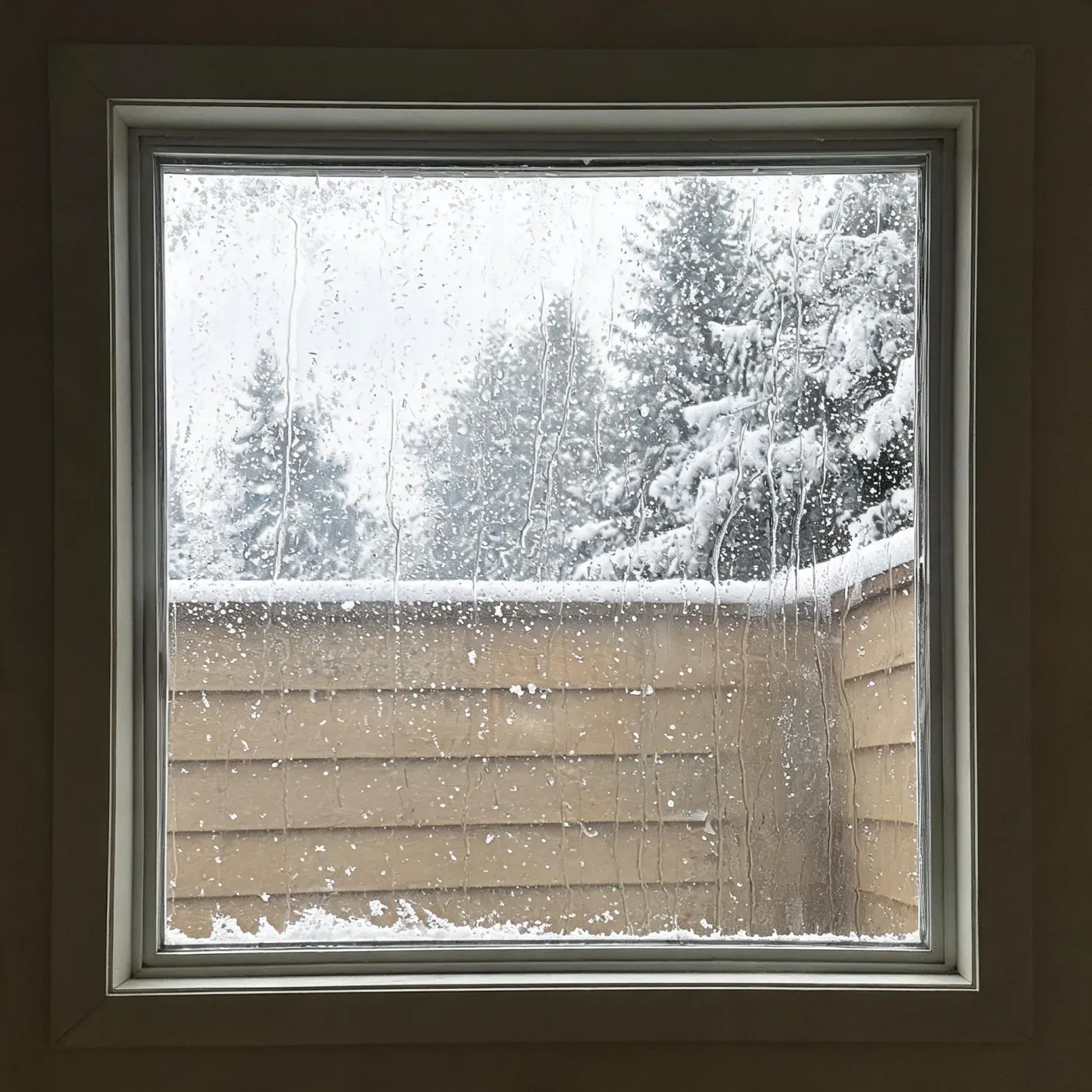
View through a square window with condensation streaks and water droplets, showing snow-covered evergreen trees above a beige horizontal-siding wall topped with snow.

Winter nights across Oregon average 32°F, according to the National Weather Service. That's the number that matters for sizing a generator here, because it's not the cold snap once a decade that your furnace has to answer to, it's a night like that happening over and over, all winter long. Most homes here heat with electricity, so when the power drops on a night that cold, the furnace doesn't idle, it stops. A generator sized for this climate has to carry the furnace through ordinary nights, not just the rare hard freeze, because in Oregon the ordinary night is the one at 32°F.

NOAA nClimDiv 1991-2020 county normals weighted by homes

A beige gas furnace in a basement with a metal flue pipe, galvanized sheet-metal ductwork to its left, and gas and water pipes along the concrete wall to its right.
Before you get your furnace installation
A gray high-efficiency furnace with white PVC vent pipes stands on a concrete pad in a basement, beside sheet-metal ductwork, copper piping and a poured concrete wall with wood framing at left.
After you get your furnace installation

32°F

That's the average winter night in Oregon, per the National Weather Service. A generator sized for that kind of night, not just a mild one, keeps the heating elements running without tripping.

Get matched

Staged heat, staged power

Electric furnace elements switch on in banks as the house calls for more heat. A generator has to cover the stage that pulls the most, not just the first one.

Get matched

Winter nights average 32°F statewide

A night at 32°F is a normal Tuesday here, not a cold snap. Your furnace will run its heating elements through most of it. A generator only sized for a mild evening leaves you short right when you need the heat most.

NOAA nClimDiv 1991-2020 county normals weighted by homes

  1. Power drops and the furnace control board shuts down instantly.

  2. A generator starts and sends power to the furnace circuit.

  3. The control board powers up and begins its cycle.

  4. The blower motor starts moving air through the ductwork.

A woman in a cream sweater and jeans stands in the open doorway of a white stucco house, holding the dark door, while a man in a dark quilted jacket seen from behind walks toward the entry past potted plants.

What size generator runs your furnace

An electric furnace needs a generator sized for the whole load, not just the blower. The heating elements draw in stages, and on a 32°F night most of those stages are running. Size for that, and the blower, the control board, and the elements all stay on together.

That's a specific enough question that it's worth getting a second set of eyes on your panel, your furnace nameplate, and what else in the house needs to run off the same generator. A contractor who works on installations like this in Oregon can look at your actual setup and tell you the right size for your house, not just for a furnace in general. Once you send the request, that part is off your plate.

Interior corner with a beige sofa holding a dark green and a light cushion and a textured throw, a potted small-leaved tree beside a white-framed window, and a dark shallow bowl on a wooden coffee table in the foreground.
A gray high-efficiency furnace with two access panels stands on a concrete basement floor, connected to sheet-metal ductwork and white PVC vent pipes, with wood framing and a gas line nearby.

A pro who works on furnaces

Step 1 of 3: Equipment