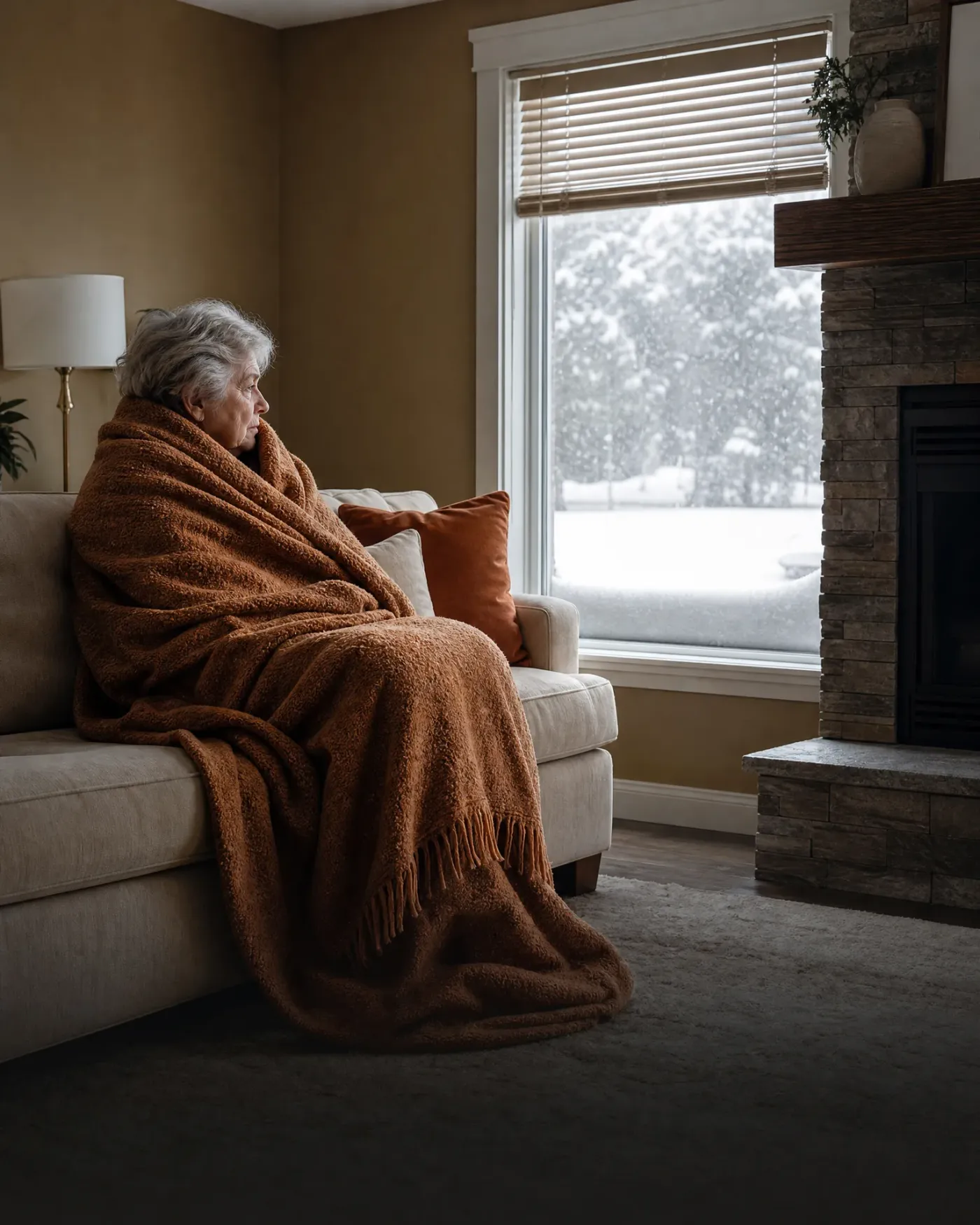








How to restart a furnace after an Oregon power outage

Step 1 of 3: Equipment

Why won't my furnace turn back on after a power outage?

A storm knocks the power out, it comes back on, but the furnace just sits there. The thermostat might show lights, the blower might hum, but no heat shows up. With most Oregon homes heating electrically, a furnace that won't restart after an outage is more than an inconvenience. It usually comes down to a control board that needs a reset or a safety switch that tripped during the outage itself.

It likely needs a power cycle or a reset switch, not a new part

Most electric furnaces run on a control board that can lock up when power cuts out mid-cycle, especially if the outage happened while the system was running. Turning the furnace off at the breaker, waiting about a minute, then turning it back on clears that lockup for a lot of units. Some furnaces also have a reset button on the control panel itself, usually red, that needs a press after a restart. If neither brings the furnace back, the board itself may have been damaged by the power surge when electricity returned, which is common after Oregon storms that cut power and restore it unevenly across a line.

A gas furnace with two gray access panels stands against a plain wall in a basement, connected to sheet-metal ductwork, white PVC vent pipes, and a yellow gas line.

Why the thermostat needs a reset

Many thermostats run on their own small battery or backup capacitor separate from the furnace itself. After an outage, the display can light up and look normal while it's still holding a setting from before the power dropped. Try turning the system off at the thermostat, waiting about a minute, then setting it to heat a few degrees above room temperature. That alone gets a lot of furnaces running again.

A gray high-efficiency furnace in a basement corner with white PVC vent pipes, copper and black gas piping, and sheet-metal ductwork beside a plain white wall and wooden stair framing.

What the furnace's own switch does

Furnaces have a toggle switch on the unit itself, often mounted nearby and shaped like a regular light switch, sometimes labeled and sometimes not. It cuts power to the furnace separately from the breaker panel and separately from the thermostat. If that switch got bumped off during the outage, or if someone shut it off and forgot to flip it back, the furnace won't start no matter what the thermostat says.

Is your house colder than the thermostat says it should be

Walk through the house and check. Rooms feel cooler than the number on the thermostat, and the air coming from the vents is barely warm or not moving at all. You might hear the blower kick on and run, but no heat follows it. Or nothing happens at all when you bump the temperature up. Pipes under sinks or in an unheated crawlspace are worth a look too, since several hours without heat during a cold snap is enough for water in them to get close to freezing. A furnace that won't restart on its own after the power comes back isn't something to leave for a day while you wait and see.

A man with grey hair and stubble in a dark sweater sits on a grey sofa indoors, looking off to the side, with a potted plant and a sunlit window behind him.
A man with gray hair, a beard and glasses, wearing a dark green sweater, sits on a gray sofa in a sunlit living room with a potted plant, table lamp and wooden sideboard behind him.
A middle-aged man with graying hair and a short beard sits on a blue sofa in a living room, looking toward a window, with a bookshelf, lamp and framed picture in the background.
A man with graying curly hair and a dark green sweater sits on a gray sofa in a sunlit living room, looking off to the side, with a framed picture, shelving, an armchair and a window with sheer curtains behind him.

One form, no calling around

If you have already flipped the breaker, reset the thermostat, and the house is still cold, the next step is having someone look at the furnace itself. That usually means a stuck relay, a control board that didn't survive the surge when the power came back, or a flame sensor that needs cleaning before the system will fire again. Tracking down who handles that in your part of Oregon takes time you don't have in a cold house: searching, calling two or three companies, explaining the same outage story each time, then waiting to see who calls back first. This sends your request to one licensed local contractor instead, someone who works on furnaces all winter and has likely seen this exact outage problem before, in homes like yours. You're not fielding calls from five different companies trying to win the job. You get one point of contact for the system in front of you, and you can get back to the part that matters, which is getting the heat back on.

Try the reset yourself first

Most of the time, getting heat back means finding the right breaker, flipping the furnace switch off and on, and waiting the few minutes it takes the system to relight. Oregon's outages are often short enough that this is all it takes. You don't need a contractor for this part, and most homeowners can do it in the time it takes to walk down to the panel and back. If the furnace fires up and stays running, you're done. If it doesn't, or it fires and then quits again, that's a sign something beyond a simple reset needs attention.

When it needs someone qualified

If the breaker holds, the thermostat is set right, and the furnace still won't run, the problem is inside the unit, and that's not something to keep testing on your own. Rather than calling around to find someone who works on furnaces, explaining the outage and what you've already tried to two or three companies, and sorting through whoever calls you back first, this connects you with one licensed contractor local to your part of Oregon. Someone who sees this exact problem every time a storm rolls through knows what a surge usually damages and can check it without guessing.

A beige metal furnace with a louvered front panel stands on a concrete floor against a concrete wall, connected to galvanized sheet-metal ductwork and a metal pipe.
Before you get your furnace repair
A gray high-efficiency furnace stands on a concrete basement floor beside sheet-metal ductwork, with white PVC vent pipes and a black flexible line running up to exposed wood floor joists, next to a wood-framed post against a concrete wall.
After you get your furnace repair

Before you get your furnace repair

You're checking the thermostat, flipping breakers, and waiting to see if the heat comes back, with no way to tell if the problem is a stuck relay, a bad control board, or something simpler. If it doesn't resolve, you're left searching for someone who works on furnaces, calling around to see who can come out, explaining the same thing more than once, and weighing quotes against each other without knowing which contractor actually knows what a power surge does to a control board. Meanwhile the house stays cold.


After you get your furnace repair

A licensed contractor local to your area comes out, one who sees this exact problem after Oregon storms and knows what a surge usually does to a furnace's relay or control board. You explain it once. There's no stack of competing quotes to sort through, no second or third company calling about the same job. The contractor checks the parts that fail after an outage, finds what didn't survive the power coming back, and gets the furnace actually producing heat again, not just running.

Winter nights average 32°F statewide

Nights here sit around freezing for most of the winter, so the furnace is working through every outage, not just the bad ones. When it doesn't restart on its own, the house loses ground fast, and that's reason enough to have the reset checked rather than guessed at.

NOAA nClimDiv 1991-2020 county normals weighted by homes

If the breaker and the thermostat reset don't bring the heat back, the furnace needs a closer look, and that's a job for someone who already knows the equipment. A local contractor who works on furnaces all winter has seen what an Oregon power outage tends to leave behind, whether that's a relay that didn't reset or a control board that took the surge. You're matched with one contractor, not a handful of companies calling at once, so you're explaining the problem once to someone qualified to fix it. The short version stands: check the breaker, cycle the switch, reset the thermostat. If the house is still cold after that, the furnace itself needs attention, and you'll have someone who works on this equipment regularly handling it instead of guesswork.

Kitchen corner with cream upper cabinets, oak lower cabinets, white marble-look countertop, beige tile backsplash, a ceramic vase of greenery, a wooden cutting board and bowl, and a black-framed window at right.
Interior corner of a room with a white-framed window and wide sill, beige walls with panel molding, a wooden cabinet holding a ceramic vase with a green leafy plant, and blurred shrubs and trees outside.
A wood-framed armchair with beige cushions and a woven lumbar pillow sits in a corner beside a large window overlooking green trees, with a tall ceramic vase holding leafy branches on the left and plaster walls and wood flooring.
Interior corner with a white-framed window above a sill, beige walls with baseboard molding, a greige shaker-style cabinet with brass knobs and a potted plant on top, light wood flooring and a woven jute rug.
A dark-framed six-pane window with white trim and sill set in gray horizontal lap siding, with hydrangea shrubs below and a white column and shingled roof section at left.

Skip the search

Your request goes to one pro, not a list of companies.

Skip calling around

It costs nothing to send, and you don't have to hire anyone.


