Tell us about the job
Takes about a minute. No obligation.
A furnace in Marion County works hard and works long. Homes in Marion County, OR run heat about ten months a year, from September through June. The burner and ignition system cycle every time the house calls for heat, and across a season that long, those parts accumulate wear that shows up as hard starts, misfires, or a heat exchanger that has fatigued at the seam. A contractor diagnosing a repair here opens with those components, because that is where the load lands. Controls and ductwork come after.
Furnaces in Marion County's older homes often outlast the parts supply built around them. Half the homes in Marion County, Oregon were built in 1979 or earlier (2020-2024 ACS 5-year). A contractor opening a furnace in stock like this finds components tied to production runs that ended long ago, which means the repair scope gets decided by what a supplier can still ship, not by what the unit needs in the abstract. Heat exchangers, igniters, and control boards for discontinued models sit on shrinking shelves, and availability shapes what the job costs as much as the diagnosis does.
The Parts of a Furnace a Contractor Checks First
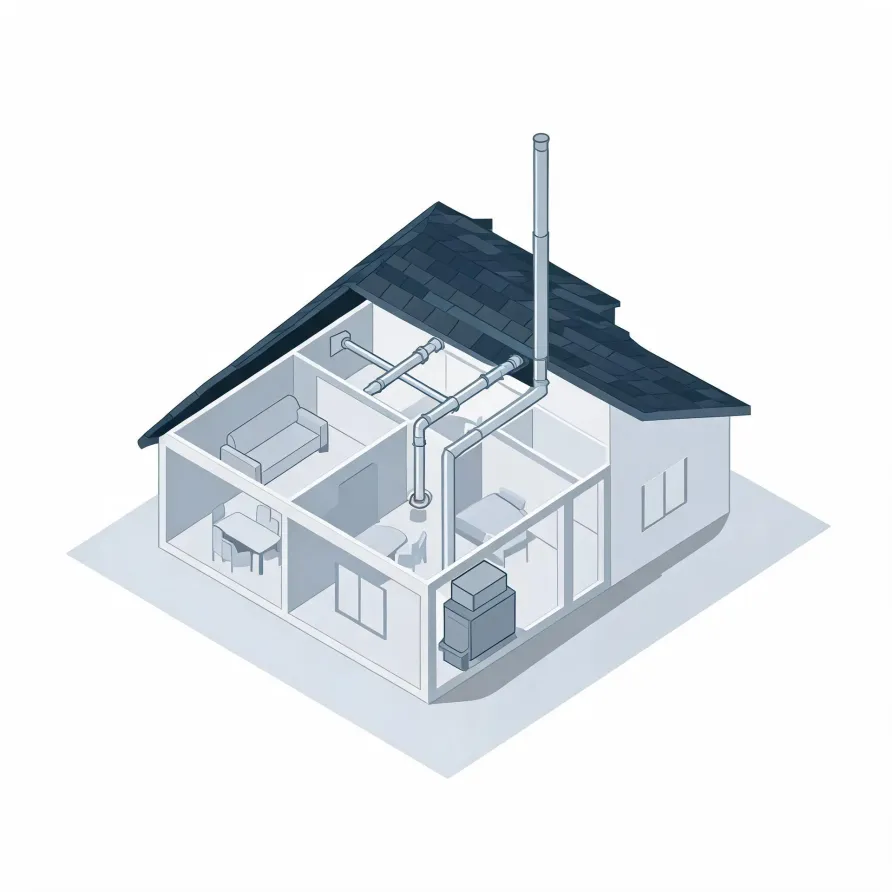
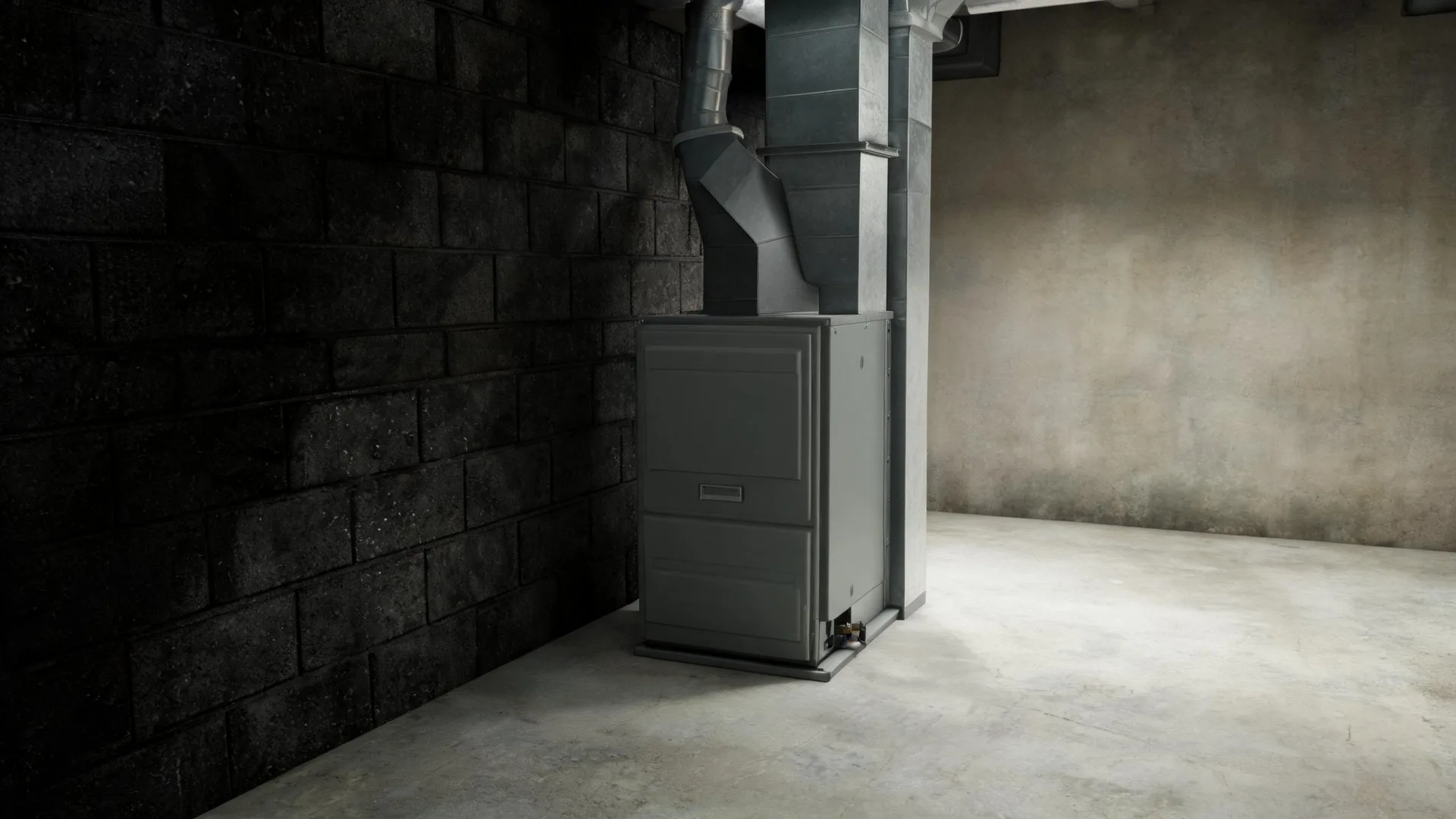
The furnace itself sits in a utility room, basement, or closet and is the piece that generates heat. Inside it, the heat exchanger and the burners are the first places a contractor looks when something is wrong. A cracked heat exchanger or a burner that will not light are two of the more common causes of a furnace that runs poorly or not at all.
The blower motor sits inside the furnace cabinet and pushes conditioned air out through the supply side of the system. The flue or exhaust vent runs from the furnace to the outside and carries combustion gases out of the house. The thermostat on the wall is the last piece a contractor checks, because a faulty signal there can look like a furnace problem when the furnace itself is fine.
The drawing shows a typical furnace layout, and a licensed contractor determines what applies to your specific system and home.
Get matched in Marion CountyMarion County, by the numbers
13 severe weather events were recorded in Marion County, Oregon between 2015 and 2024.
NOAA National Centers for Environmental Information, Storm Events Database, bulk CSV export, events 2015-01-01 through 2024-12-31.Half the homes in Marion County, Oregon were built in 1979 or earlier (2020-2024 ACS 5-year).
U.S. Census Bureau, 2020-2024 American Community Survey 5-Year EstimatesMarion County, Oregon holds 132,295 housing units (2020-2024 ACS 5-year).
U.S. Census Bureau, 2020-2024 American Community Survey 5-Year EstimatesOwners occupy 62.3% of the occupied homes in Marion County, Oregon (2020-2024 ACS 5-year).
U.S. Census Bureau, 2020-2024 American Community Survey 5-Year EstimatesCodes & Standards Governing Furnace Repair in Marion County, Oregon6 sourced rules & standards
What Happens When a Contractor Comes Out
Non-weatherized gas furnaces manufactured on or after November 19, 2015 must reach 80.0 percent AFUE.
Non-weatherized oil-fired furnaces manufactured on or after November 19, 2015 must reach 83.0 percent AFUE.
Mobile home gas furnaces manufactured on or after November 19, 2015 must reach 80.0 percent AFUE.
Non-weatherized gas furnaces manufactured on or after December 18, 2028 must reach 95.0 percent AFUE, up from the 80.0 percent minimum that applies to units manufactured before that date.
Licensing and Legal Requirements in Marion County, Oregon
Oregon’s contractor licence does not reach casual, minor or inconsequential work on one structure where the person’s contracts total less than $1,000 — and the exemption is unavailable to anyone who advertises or signs themselves as a contractor, at any price.
Oregon requires a current Construction Contractors Board licence, with the right endorsement, to undertake, offer to undertake or bid construction work.