Tell us about the job
Takes about a minute. No obligation.
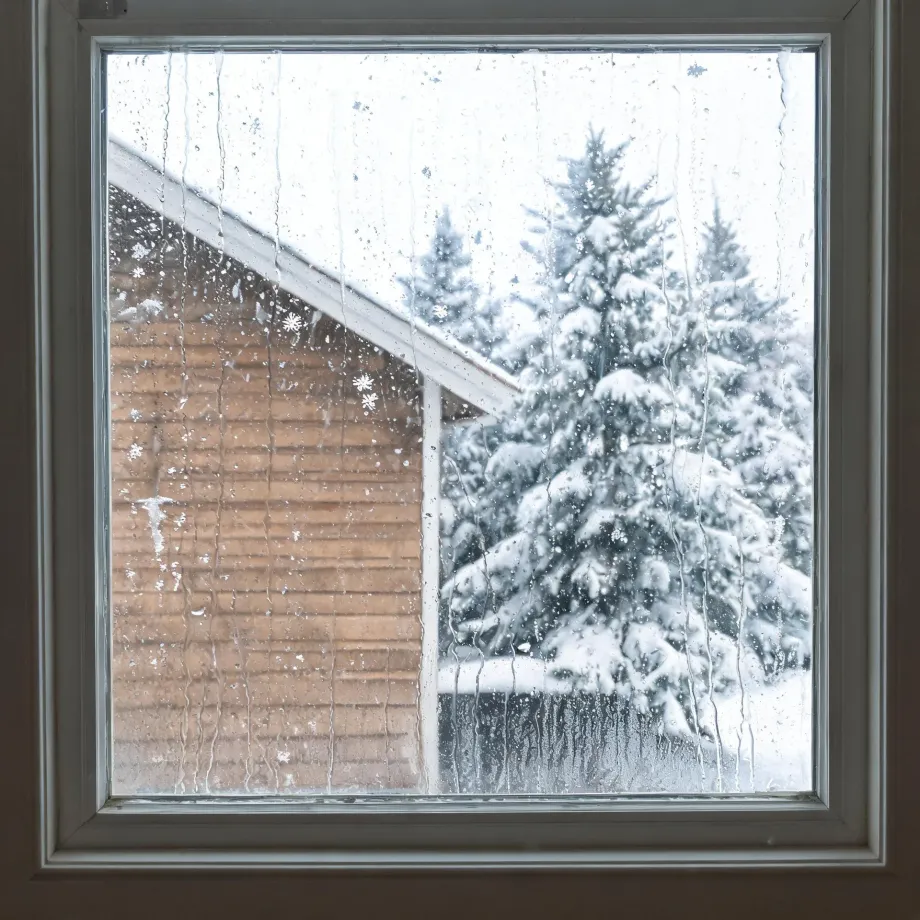
A furnace repair in Lake County starts with what has been running hardest. Homes in Lake County, OR run heat about ten months a year, from September through June. That load falls on the burner, the heat exchanger, and the ignition system. A contractor working a repair here checks those components before moving to controls or secondary parts, because accumulated cycling wear on a furnace concentrates there. If the heat exchanger is cracked, the repair scope changes entirely. A contractor needs to establish that before quoting anything else.
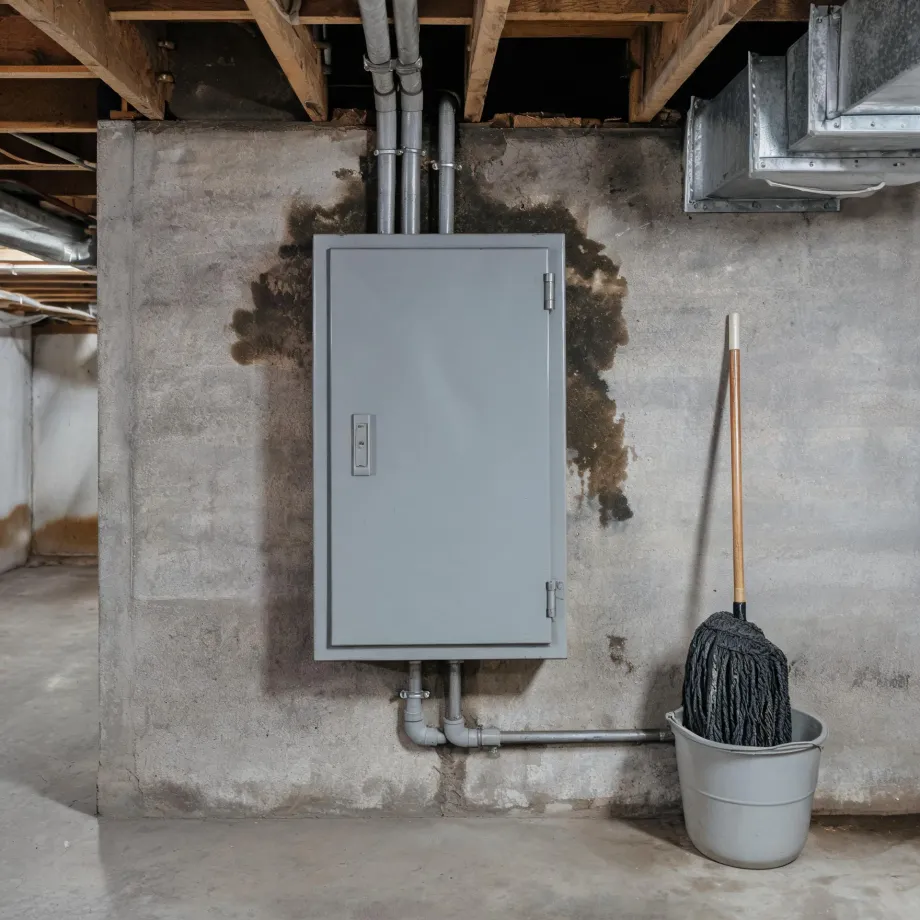
Half the homes in Lake County, Oregon were built in 1972 or earlier (2020-2024 ACS 5-year). A house that old was fitted out with heating equipment long since replaced by different designs, and when a furnace in that stock fails and a contractor opens it up, the parts question arrives fast. Heat exchangers, limit switches, and burner assemblies from that era carry tolerances and thread patterns that current wholesale catalogs do not stock as a matter of course. A contractor working a repair here spends real time on sourcing before the fix itself, and what they find inside the cabinet decides whether the job ends with a replaced component or a conversation about what comes next.
The Parts of a Furnace a Contractor Checks First
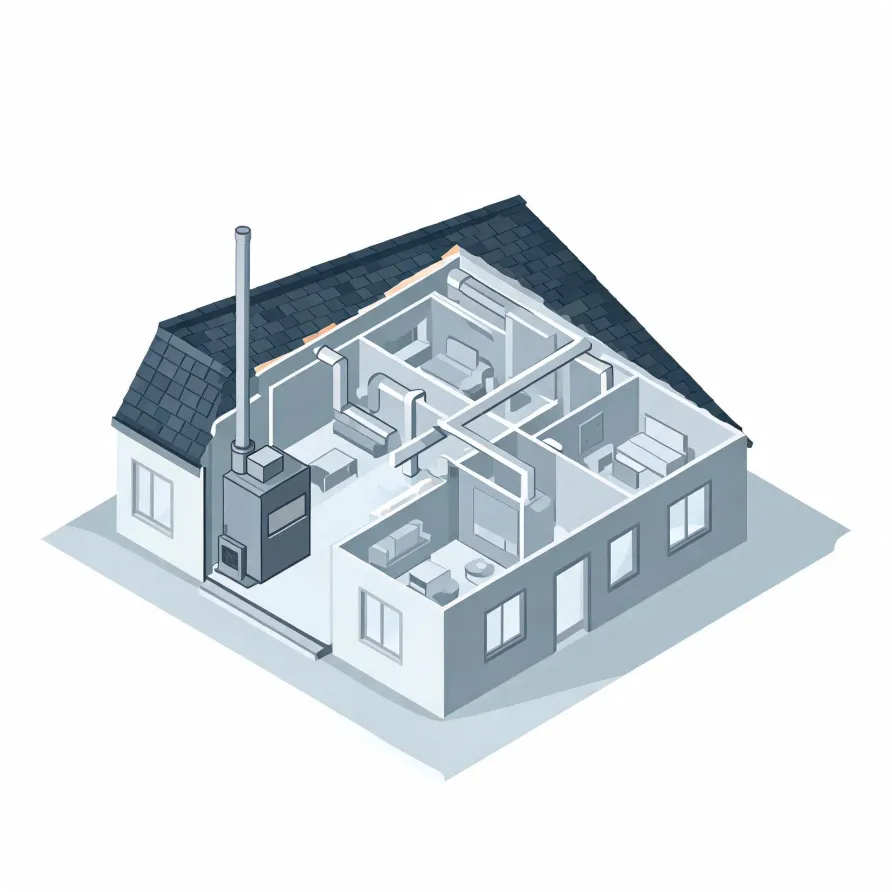
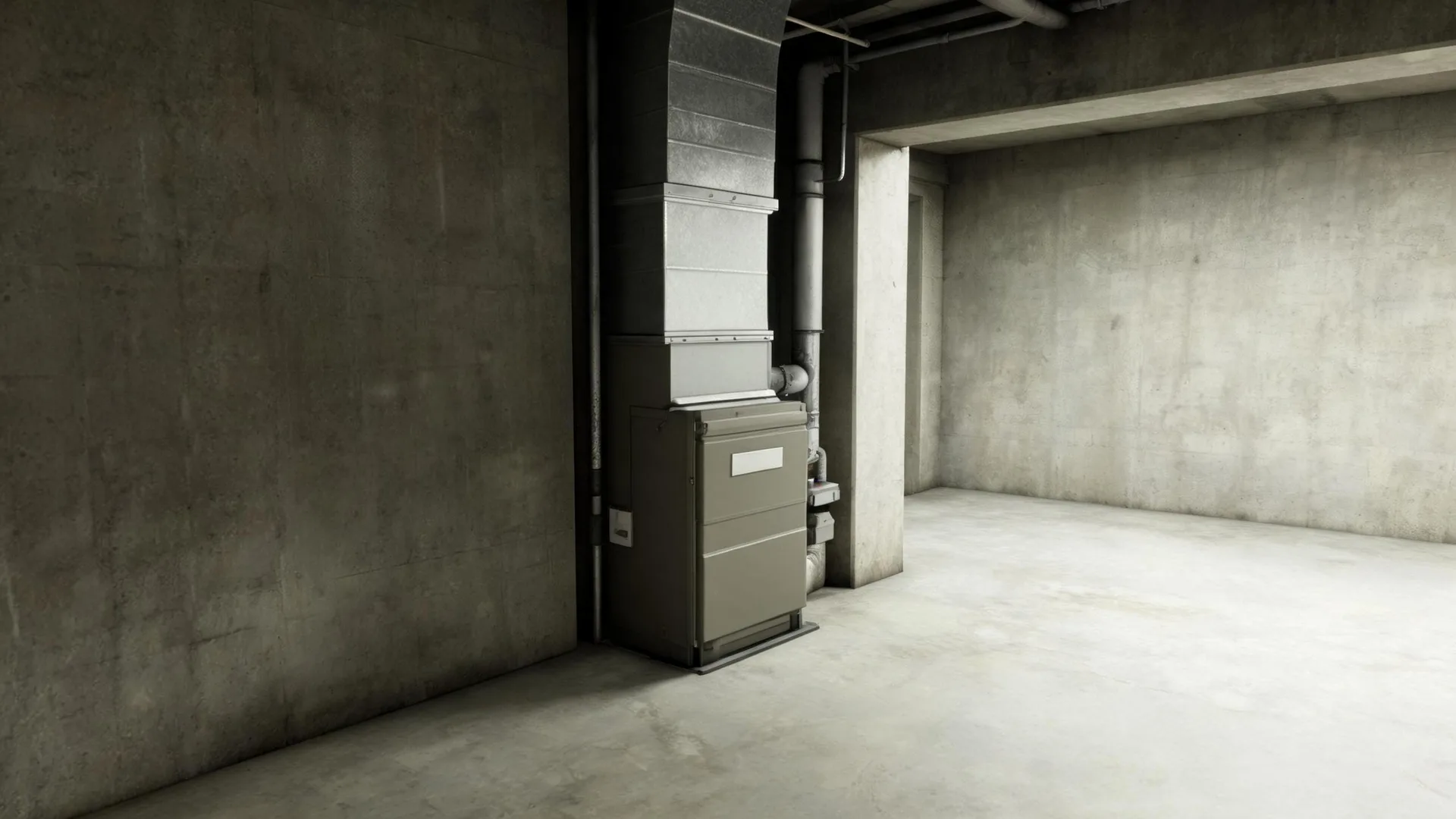
The furnace itself sits in a utility space, basement, or closet and is where heat gets made. Inside it, the heat exchanger, burners, and blower motor each carry a share of that work. When a furnace stops heating or starts behaving oddly, a contractor traces the problem to one of these components first, because a cracked heat exchanger, a failed burner, or a worn blower motor each produces its own recognizable set of symptoms.
The flue or exhaust vent runs from the furnace to the outside and removes combustion gases from the house. Alongside it, the ignitor and flame sensor work together to start and confirm a flame on each heating cycle. Both are small parts, but a failed ignitor means no heat at all, and a dirty or degraded flame sensor causes the burner to light and then shut back down within seconds.
The drawing shows a typical furnace layout, and a licensed contractor determines which components apply to the specific system in your home.
Get matched in Lake CountyLake County, Oregon, by the numbers
170 severe weather events were recorded in Lake County, Oregon between 2015 and 2024.
NOAA National Centers for Environmental Information, Storm Events Database, bulk CSV export, events 2015-01-01 through 2024-12-31.Half the homes in Lake County, Oregon were built in 1972 or earlier (2020-2024 ACS 5-year).
U.S. Census Bureau, 2020-2024 American Community Survey 5-Year EstimatesLake County, Oregon holds 4,234 housing units (2020-2024 ACS 5-year).
U.S. Census Bureau, 2020-2024 American Community Survey 5-Year EstimatesOwners occupy 67.3% of the occupied homes in Lake County, Oregon (2020-2024 ACS 5-year).
U.S. Census Bureau, 2020-2024 American Community Survey 5-Year EstimatesCodes & Standards Covering Furnace Repair in Lake County, Oregon6 sourced rules and standards
What the repair visit looks like
Non-weatherized gas furnaces manufactured on or after November 19, 2015 must reach 80.0 percent AFUE.
Non-weatherized oil-fired furnaces manufactured on or after November 19, 2015 must reach 83.0 percent AFUE.
Mobile home gas furnaces manufactured on or after November 19, 2015 must reach 80.0 percent AFUE.
Non-weatherized gas furnaces manufactured on or after December 18, 2028 must reach 95.0 percent AFUE, up from the 80.0 percent minimum that applies to units manufactured before that date.
Licensing and Legal Requirements in Lake County, Oregon
Oregon’s contractor licence does not reach casual, minor or inconsequential work on one structure where the person’s contracts total less than $1,000 — and the exemption is unavailable to anyone who advertises or signs themselves as a contractor, at any price.
Oregon requires a current Construction Contractors Board licence, with the right endorsement, to undertake, offer to undertake or bid construction work.
Severe Weather Events in Lake County
Harsh weather puts real hours on a furnace. The more a system has to fight the outside to hold a set temperature, the more wear it accumulates, and that wear is what brings repair calls.
170 severe weather events, 2015–2024. Source: NOAA National Centers for Environmental Information, Storm Events Database.